Author: PDCC Lydia

  • Growing on our Spiritual Journey

    Growing on our Spiritual Journey

    NEWSLETTER: OCTOBER 2026

    Growing on our Spiritual Journey

    by Jennifer Duarte – PDCC Editorial Team

    Our spiritual journey is a lifelong path without a retirement date. The different stages of our lives, from leaving school, to starting a career, to marriage and even the advent of AI, all bring unique gifts (aspirations, reflection, skills and experiences) to draw upon. Continued learning about our faith in our adult years—whether through scripture and pilgrimages, rites and rituals, sacred text and videos, or even conferences and theological discussions —makes our faith journey a season of active spiritual growth.

    We are proud to acknowledge that another three of our Evangelizing Catechists (ECs) from the Penang Diocese have undergone the GROW (God Redeeming Our World) program, a comprehensive online Catholic catechetical series authored and presented by Rev. Deacon Prof. Dr. Sherman Kuek OFS.
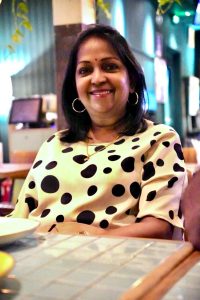
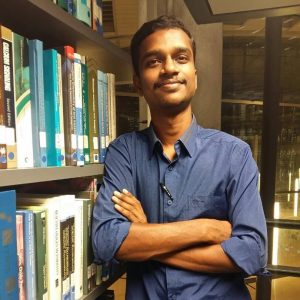
    Veronica Komathi

    Veronica Komathi

    Veronica Komathi, an RCIA facilitator from the Parish of Our Lady of Lourdes, Ipoh, took 3 years to complete this online course of study. This is her testimony.

    • From Encounter to Embrace

    My faith journey is a testimony of God’s gentle leading. Born into a Hindu family, my first encounter with Christ happened during my school days at a convent school. It was there that I first encountered the way of Christ. My headmistress, an Irish nun, left a deep impression on me. She was a woman who was both strict and compassionate, living out the love of Christ in tangible ways. That seed of faith planted in my school years continued to grow. In the midst of my contemplation on embracing Christianity, the Lord placed my husband in my path; he was my school-mate back then. He became my guide and companion on this journey of faith. Later, during my university days, I took the decisive step to embrace the Catholic faith and received my baptism at the Church of St. Francis Xavier, Petaling Jaya.

    • A Thirst to Know More

    For me, getting baptised was not the end, but the beginning of a lifelong quest to know the Lord more deeply. I have always had the interest to deepen my knowledge of our faith and to explore what I am missing, or in other words, to learn about what I do not know about our faith. I believe that it is the Lord leading me.

    Driven by this thirst, I completed a 3-year Diploma in Theology through the Distance Education Programme in Theology (DEPTh) from the prestigious Vidyajyoti College of Theology, Delhi, in October 2023. Not wanting to stop there, I enrolled in the GROW program from July 2023 to September 2026, which has given me even more input and insights into the richness of our Catholic faith.

    • Balancing Faith, Work and Life

    As a full-time teacher, the main challenge was finding the balance between work and the GROW program studies. However, the longing and love for learning has helped me to persevere.

    • What Next?

    The more I sign up for faith-related courses, the more I encounter new insights. I will continue to seek the guidance of the Lord to lead me where He wants me to go. As an RCIA facilitator, I now channel my knowledge and experiences as I journey with others who, like me, are seeking to find Christ and embrace the Catholic faith. This is my faith journey – one that continues to blossom and bear fruit, as I remain open to God’s call to GROW.
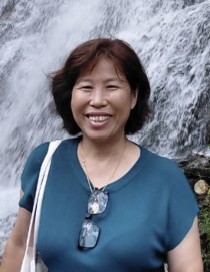
    Sandra Lim

    Sandra Lim

    Sandra Lim Teik Hong, an EC helping out with RCIA at the parish of the Holy Name of Jesus, Balik Pulau in Penang finished her GROW program in about 2 years. She undertook this course in Chinese, primarily because she was curious about the faith, especially about what she didn’t yet know.

    • The Journey

    She confessed that it was not an easy task since it was a self-study course. One needed to be very disciplined. Many a time, she was too preoccupied with her other tasks and neglected the course. But miraculously, she heard the Holy Spirit reminding her, “Hey, you still have unfinished work to do for your study program!”  “That is what kept me going to finish it,” she quipped.

    • The Experience

    She did learn a lot and gain new experiences. Obstacles faced were mainly in the terminology used. “Most of the terms used were in English. I am used to Chinese terms but I managed to translate them with Google translate and confirmed the translation with Rev. Deacon Sherman Kuek,” Sandra said.

    • What next?

    Like most graduates, completing the whole course doesn’t mean the end of learning for Sandra. She strives to review what she has learnt from time to time, so that she will not forget it. She said that academic goals were not important when she decided to take up this course. She also feels more confident in the knowledge of her faith now, and has willingly agreed to assist in establishing the English RCIA group for her parish. We wish her God’s blessings in all her endeavours.
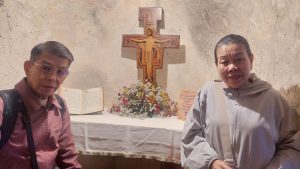
    Joseph Chan

    Joseph Chan

    Joseph Chan, the Lead Coordinator for RCIA at the Church of Divine Mercy (CDM), Sungai Ara, Penang, took 2 years to complete the GROW program. He shares his story.

    • The RCIA Journey

    For the past 13 years, RCIA has been an important part of my journey at CDM, Sungai Ara. Over the years, I have had the privilege of accompanying many individuals as they searched for God, discovered the Catholic faith, and began their journey towards becoming disciples of Christ.

    My decision to enrol in the God Redeeming Our World (GROW) program came from a simple desire: I wanted to deepen and strengthen my own Catholic faith. After many years of serving in RCIA, I realised that experience alone is not enough. I wanted a more systematic understanding of my faith so that I could serve others with greater confidence, clarity and depth.

    • Learning Amid a Busy Working Life

    One of my biggest challenges is time. I am a freelance trainer specialising in legal compliance and credit analysis, and much of my work involves travelling to different locations to conduct training for bank staff. My training programs can take up most of the working day, and my schedule can be quite demanding.

    Balancing work, family commitments, RCIA responsibilities and a two-year course is certainly not easy. There were times when I had to carefully plan my schedule just to make time for study, reflection and assignments.

    Yet, this challenge has also reminded me that learning about our faith cannot always be separated from the realities of everyday life. In fact, my busy schedule has encouraged me to become more disciplined in making time for God.

    • Learning for the Ministry

    My motivation for taking up GROW is not simply academic. I see the course as part of my preparation for serving the RCIA community. The RCIA syllabus has recently undergone significant changes, and this presented both a challenge, as well as an opportunity, for our parish. Since the new syllabus was launched this year, one of my aspirations after completing the GROW program is to bring together what I have learnt through GROW, my 13 years of RCIA experience, and the needs of our parish community to develop an RCIA journey that is more systematic, engaging and meaningful for our catechumens and candidates.

    • Still Learning, Still Searching

    Although I am already serving in RCIA, I consider myself very much a learner. The more I discover about the Catholic faith, the more I realise how much more I have yet to learn.

    My academic goal was therefore not simply to obtain a qualification at the end of the two years. I am still looking for programs and opportunities that can help me continue to deepen my understanding of Scripture, Church teaching, theology and discipleship.

    For me, GROW was not just another course to complete. It is part of an ongoing journey of learning, growing and serving. Ultimately, I hope that what I gain from this program will not just remain with me. I want to share it with others, especially those who come to RCIA seeking answers, meaning and a deeper relationship with Christ.

    After 13 years in RCIA, I have come to appreciate that accompanying others on their journey of faith also requires us, as ministers, to grow on our own faith journey. I seek to learn so that I can serve better. I myself grow, so that I can help others to grow too. And I continue searching because there is always more to discover about our God who continues to redeem and transform our world.

    More info on the GROW Course

    God Redeeming Our World (GROW) is a 100% Catholic program presented in a systematic and simple way which helps you make deep sense of your own existence and life from Catholic perspective. More information about this program is available at https://www.splendourproject.com/grow.html

    You may use the language (English, BM, Tamil, 华文) you are comfortable with to fill in this registration form. This program is available in English and BM, with subtitles in Chinese (中文字幕) and Tamil.

    Your registration with PDCC as a parish, ministry or church community entitles you to a 50% discount (i.e. RM60 per each period of 6 months after discount); this is an initiative by the Penang Diocesan Catechetical Commission (PDCC) with the Splendour Project.

    If you register for it with Splendour Project directly, this offer of 50% discount isn’t applicable. So do contact Jeanne J. Saw (016-4554597) before you sign up to tell her of your intention to take up the course. Then click https://forms.gle/ofQacBrpx2zJsUmC7  to register.

    Please share this great opportunity with your Catholic family members and friends, RCIA neophytes, post-Confirmation youths, community leaders, extraordinary ministers of Holy Communion, ministry coordinators, or leaders in any capacity and even any lay faithful within the Penang Diocese.

    𝐃𝐄𝐕𝐄𝐋𝐎𝐏𝐌𝐄𝐍𝐓 𝐎𝐍 𝐓𝐇𝐄 𝐆𝐎𝐃 𝐑𝐄𝐃𝐄𝐄𝐌𝐈𝐍𝐆 𝐎𝐔𝐑 𝐖𝐎𝐑𝐋𝐃 (𝐆𝐑𝐎𝐖) 𝐏𝐑𝐎𝐆𝐑𝐀𝐌𝐌𝐄

    The Splendour Project is delighted to announce that our GROW catechesis has recently received the 𝙉𝙞𝙝𝙞𝙡 𝙊𝙗𝙨𝙩𝙖𝙩 (a formal declaration that “nothing stands in the way”) from the Most Rev. Dr James Thoppil, the Bishop of Kohima, an Asian theologian who holds a Doctor of Sacred Theology (STD) from the Pontifical Urban University in Rome. This declaration formally attests to the doctrinal and moral integrity of the series for faith formation throughout the universal Church.

    Congratulations to all our ECs who have undertaken GROW and received their certificate validated by the Centre for Christian Studies and Theological Education (CHRISTE).

    For those still undergoing this GROW course, it is a profound commitment to your spiritual and intellectual formation. Don’t rush through! Trust the process and the hand of our Lord working in your lives! Move systematically through the eight periods patiently to build a rock-solid foundation of your Catholic faith!
    Author
    Picture of Jennifer Duarte

    Jennifer Duarte

    PDCC Editorial Team

    PDCC is the official body that oversees the development of Catechesis in the Diocese of Penang, Malaysia.

    Contacts :

  • Evangelizing Catechists of Southern Perak Rediscover Their Evangelizing Mission

    Evangelizing Catechists of Southern Perak Rediscover Their Evangelizing Mission

    NEWSLETTER: OCTOBER 2026

    Evangelizing Catechists of Southern Perak Rediscover Their Evangelizing Mission

    by Jeffry Christopher (PDCC Core Team – Artificial Intelligence)

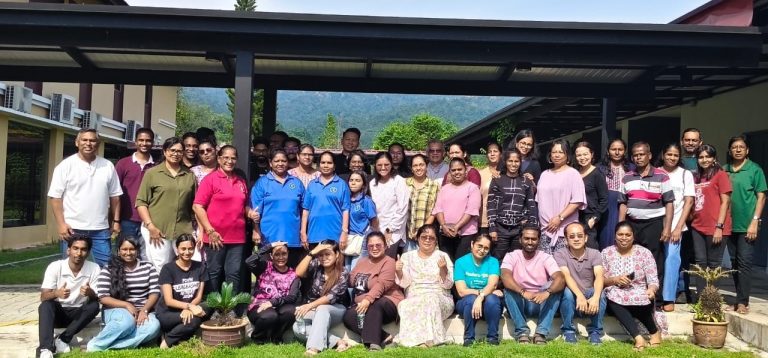
    In August 2026, 44 Evangelizing Catechists (ECs) from parishes in Southern Perak came together for the Evangelizing Catechist Basic Course (ECBC) Module 1. The parishes involved were the Church of the Sacred Heart, Kampar; Church of St. Mary, Tapah; Church of the Most Holy Redeemer, Tanjung Malim; Church of St. Francis De Sales, Sitiawan; Church of St. Anthony, Teluk Intan; Chapel of St. Joseph, Bidor; and Chapel of St. Jude, Gopeng.

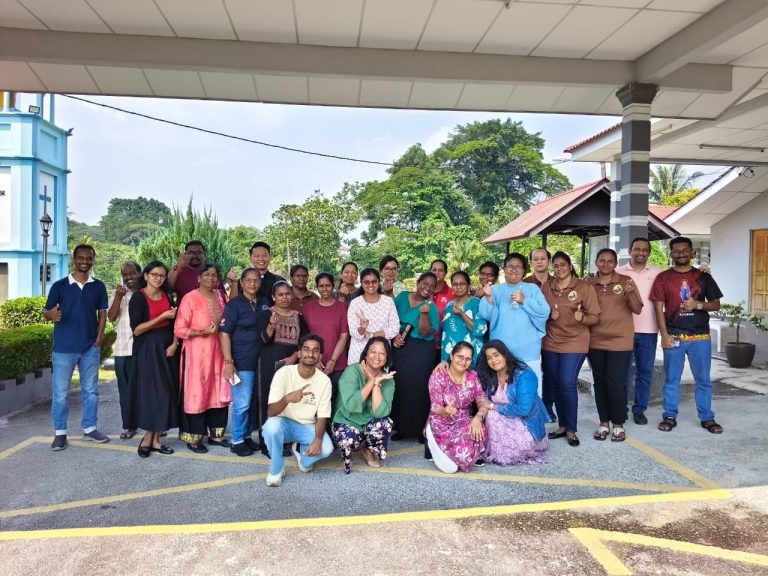
    The course ran for two full Saturdays: on 8 August at the Church of the Sacred Heart, Kampar, and on 22 August at the Church of St. Mary, Tapah. It was conducted in English, Tamil and Bahasa Melayu. The sessions were delivered by a team of facilitators from across the diocese: Lillian Kandiah (Church of Our Mother of Perpetual Help, Ipoh), Shana Mabel (Church of St. Michael, Ipoh), Cristtopher Yesudass (Taiping Catholic Church), Deacon Isaac Simbun (Church of the Most Holy Redeemer, Tanjung Malim), and Sam Daniel and Jeffry Christopher (Church of St. Mary, Tapah).

    At the centre of the programme was a simple but challenging conviction: catechesis is not only about passing on religious knowledge but is a ministry of evangelization. Before ECs can lead children, youth or families to Christ, they must first be disciples who have personally encountered Him.

    The participants began with a joint introductory session by Mark Stephen, PDCC’s ECBC Coordinator, on the need for the ECBC and a renewed approach to catechesis. The first topic, ‘A Paradigm Shift for Catechetical Ministry Today’, invited participants to look honestly at how the needs of today’s children and families have changed. This was followed by reflections on self-evangelization as the starting point of formation, the Holy Spirit as the guide of every EC and the art of evangelization and catechesis.

    Day 1, At the Church of the Sacred Heart, Kampar, 8 August 2026

    The second day began with a recap before moving to more personal ground. Participants reflected on the emotional, spiritual and relational obstacles they face and on how their God-given charisms can make their catechesis more fruitful. The course closed with a practical session on S.M.A.R.T. goal-setting to turn renewed zeal into concrete plans for the year ahead.

    Through presentations and group discussions, ECs from different parishes also had a rare chance to meet, share their joys and struggles and learn from one another, discovering that they do not walk this journey alone.

    Day 2, At the Church of St. Mary, Tapah, 22 August 2026

    PDCC thanks the parish priests, the host communities, the facilitators and ECs who committed themselves to be formed and renewed. May the fire rekindled during the two days continue to burn brightly in our classrooms, families and parishes.

    Author
    Picture of Jeffry Christopher

    Jeffry Christopher

    PDCC Core Team – Artificial Intelligence

    PDCC is the official body that oversees the development of Catechesis in the Diocese of Penang, Malaysia.

    Contacts :

  • Nurturing the Vineyard: A Challenge for Our ECs

    Nurturing the Vineyard: A Challenge for Our ECs

    NEWSLETTER: OCTOBER 2026

    Nurturing the Vineyard: A Challenge for Our ECs

    by Jennifer Duarte, EC at the Church of St Michael, Ipoh

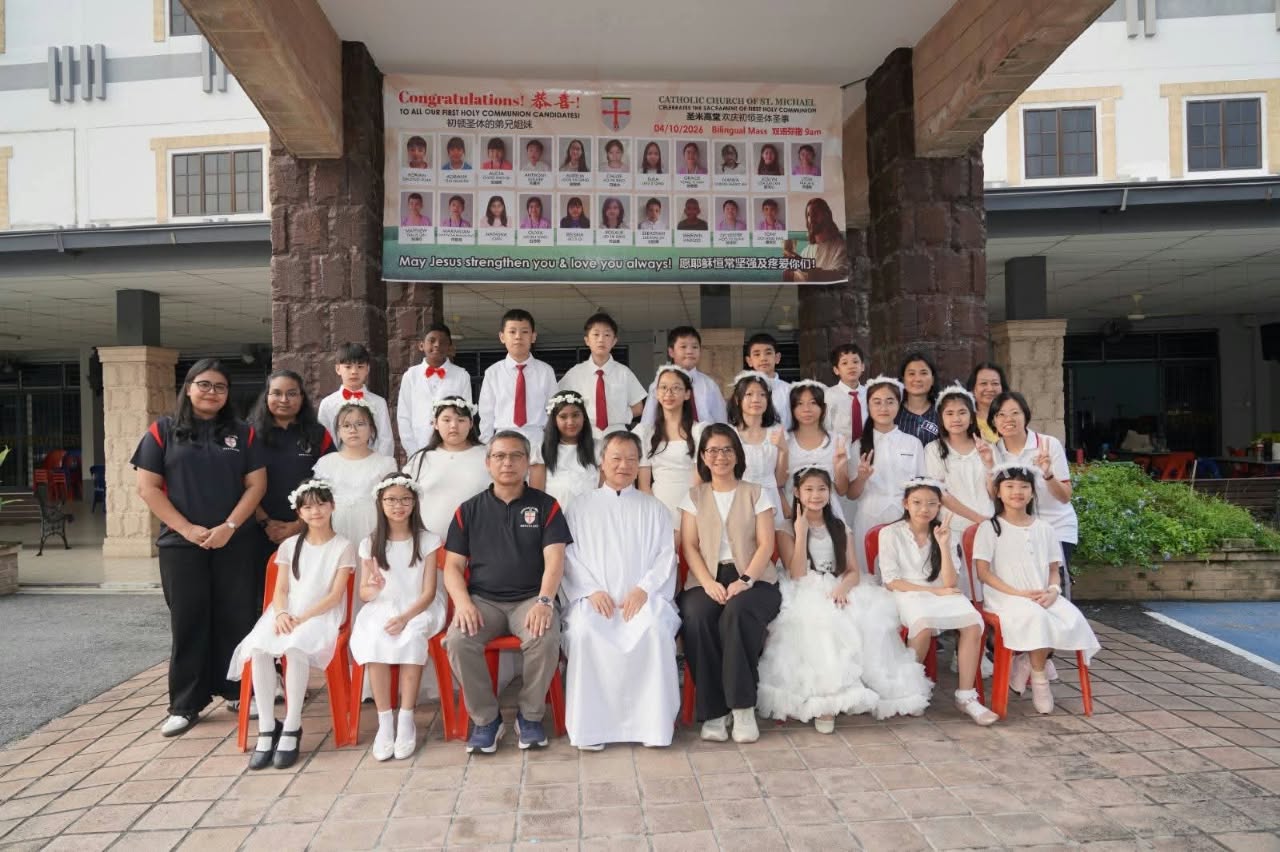
    The 10-year-old children from both the Chinese- and English-speaking Catechism classes at the Church of St Michael, Ipoh, received their First Holy Communion on 4 October during a bilingual Mass celebrated by Monsignor Stephen Liew.

    It was a beautiful and significant milestone in their journey of faith. Dressed in white, the children looked like little angels, their faces reflecting the excitement and joy of receiving Jesus in the Eucharist for the first time.

    Yet, beneath the joy of this celebration lay an important challenge — not only for the children and their parents, but especially for those entrusted with nurturing their faith: their evangelizing catechists (ECs).

    On this 27th Sunday in Ordinary Time, the first reading from Isaiah 5:1–7 and the Gospel reading from Matthew (21:33-43) both presented the powerful image of a vineyard. In Isaiah, God lovingly prepared a vineyard. He cultivated the soil, planted good vines and cared for them, expecting them to produce good grapes. Instead, the vineyard produced sour and wild grapes.

    In the Gospel, Jesus tells the Parable of the Wicked Tenants. The tenants had been entrusted with the vineyard, but they forgot that they were merely caretakers. They behaved as though the vineyard belonged to them and failed to give the owner the fruits that were rightfully his.

    In his homily, Monsignor Stephen Liew reminded the congregation that the vineyard can be likened to the Church and to our life of discipleship. Everything we have is ultimately a gift from God. Our talents, abilities and opportunities are entrusted to us so that we may use them for His glory and for the good of others.

    For ECs, this image of the vineyard carries a particularly powerful message. Monsignor Stephen’s words, “Whether these children bear sour grapes or sweet grapes will depend on their teachers, parents and priests”  made me pause and reflect.

    The children entrusted to us are part of God’s vineyard. We are their caretakers. We do not own their faith. We cannot force them to believe or love God. But we can prepare the soil, plant the seeds, nurture growth, remove the weeds, provide support and patiently wait for the fruits to appear.

    Every lesson we teach is a seed. Every prayer we lead is a seed. Every hymn that we sing is a seed. Every word of encouragement is a seed. Every act of patience, kindness and understanding is a seed.

    But seeds need more than planting. They need constant care. As ECs, we therefore need to ask ourselves: What kind of vineyard are we cultivating?

    • Are we merely teaching the children prayers, doctrines and Bible stories, or are we helping them encounter Jesus?
    • Are our lessons helping them to know about God, or are we helping them to know and love God?
    • Do our children see in us people who genuinely live their faith, or do they see faith as something that exists only in the Catechism classroom and at the celebration of the Eucharist?

    Most importantly, what kind of fruit are we helping them to bear? This is a daunting challenge for us! We definitely will not be able to do it on our own, but will succeed if we place our trust in the Holy Spirit.

    If we want our children to bear sweet fruit, then we must first tend our own vineyard.

    We need to keep cultivating our own faith, deepening our relationship with Christ and allowing the Holy Spirit to transform us. We need to be willing to prune away impatience, complacency and self-interest. We need to keep learning, growing and renewing ourselves so that we can better serve the children entrusted to us.

    The task of an EC is therefore much more than teaching a weekly lesson. It is the sacred work of cultivating the young to live lives pleasing to God.

    May we, as ECs, take up this challenge with renewed commitment. The desire of a good and faithful EC is to produce a harvest of sweet and abundant fruits — children who know Jesus, love Him, live their faith and, in turn, become fruitful disciples who bring others closer to God.

    Let us work diligently in God’s vineyard, and with the help of the Holy Spirit, prepare the good soil, plant the good seeds and nurture the children entrusted to us with love and patience.

    Author
    Picture of Jennifer Duarte

    Jennifer Duarte

    Jennifer Duarte, EC at the Church of St Michael, Ipoh

    PDCC is the official body that oversees the development of Catechesis in the Diocese of Penang, Malaysia.

    Contacts :

  • 41 Young hearts empowered by the Holy Spirit

    41 Young hearts empowered by the Holy Spirit

    NEWSLETTER: OCTOBER 2026

    41 Young hearts empowered by the Holy Spirit

    by Isabel Joseph – EC at the Church of St Jude, Gopeng

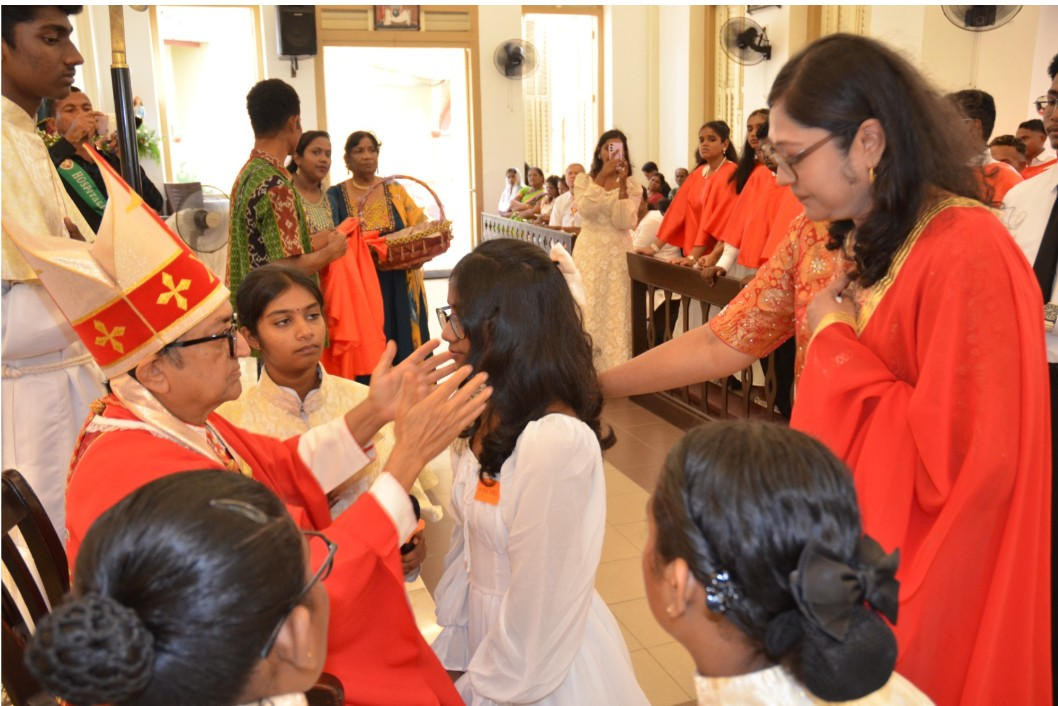
    On Sunday 4 October, the Sacrament of Confirmation was solemnly administered by Cardinal Sebastian Francis at St Anthony’s Church, Teluk Intan, to 38 confirmands from St Anthony’s parish and three confirmands from St Jude’s parish, Gopeng.

    It was a beautiful and meaningful celebration as the young hearts were empowered with the gifts of the Holy Spirit, strengthened in faith and called to embrace their mission as disciples of Christ.

    Setting the tone for a profound spiritual celebration, the entrance hymn, ‘Siapkan DiriMu, Siapkan Hati’, sung by members of the Indonesian choir, beautifully reflected the biblical imagery of the vineyard and the people of Israel. In his inspiring homily, Cardinal Sebastian reminded the congregation that those blessed by God were not only figures from the ancient stories of Israel.

    “Today, we are witnessing that same blessing here in St Anthony’s Church, with the presence of our young confirmands, who are ready to receive the gifts of the Holy Spirit,” the Cardinal said.

    The Cardinal emphasised that receiving the Holy Spirit does not mean that life will be free from obstacles or challenges. Instead, it prepares one to face the realities of life with courage and faith, especially the challenges that await us beyond the walls of our parishes, schools, universities, workplaces and society.

    He reminded the confirmands that the Holy Spirit is always with them. Whatever difficulties they may encounter, they must face them bravely, trusting in God’s presence and guidance.

    The powerful words “Go forth, do not go backwards!” serve as a reminder that Confirmation is not the end of a spiritual journey, but the beginning of a greater responsibility. The confirmands are now called to shine, to contribute meaningfully to their parishes and society, and to use their God-given gifts to make a difference in the lives of others.

    The Cardinal also highlighted the symbolism of the colour red, representing the fire of the Holy Spirit – a fire that ignites faith, strengthens courage and inspires one to serve with passion. “It is a call for our young people to step forward, become active in their parishes and continue growing as devoted followers of Christ,” he reiterated.

    As faith blossoms in their hearts, may it also blossom within their families.

    May the fire of the Holy Spirit burn brightly in the hearts of all the faithful, guiding their decisions, strengthening their faith and inspiring them to serve God and His people wherever life takes them.

    Go forth in faith. Go forth in courage. Go forth and shine.

    Never go backwards!

    Author
    Picture of Isabel Joseph

    Isabel Joseph

    EC at the Church of St Jude, Gopeng

    PDCC is the official body that oversees the development of Catechesis in the Diocese of Penang, Malaysia.

    Contacts :

  • Catechetical Insights from MPC 2026, Sibu

    Catechetical Insights from MPC 2026, Sibu

    NEWSLETTER: SEPTEMBER 2026

    Catechetical Insights from MPC 2026, Sibu

    by Mariaselvam Santiahoo (PDCC Core Team – Catechism)

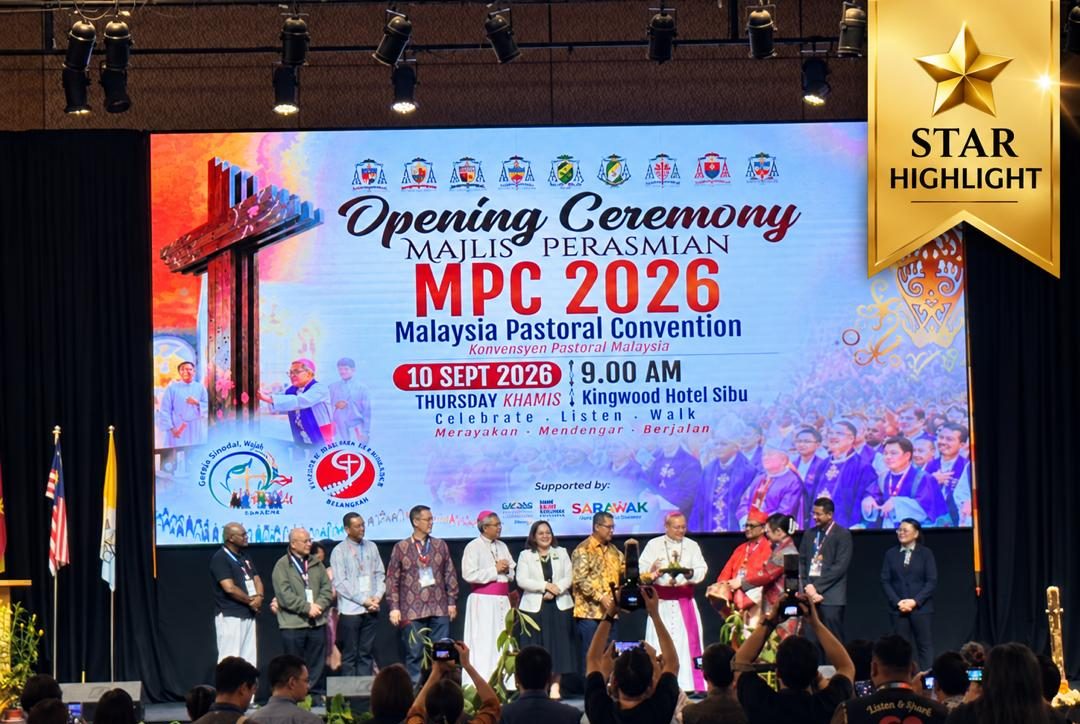
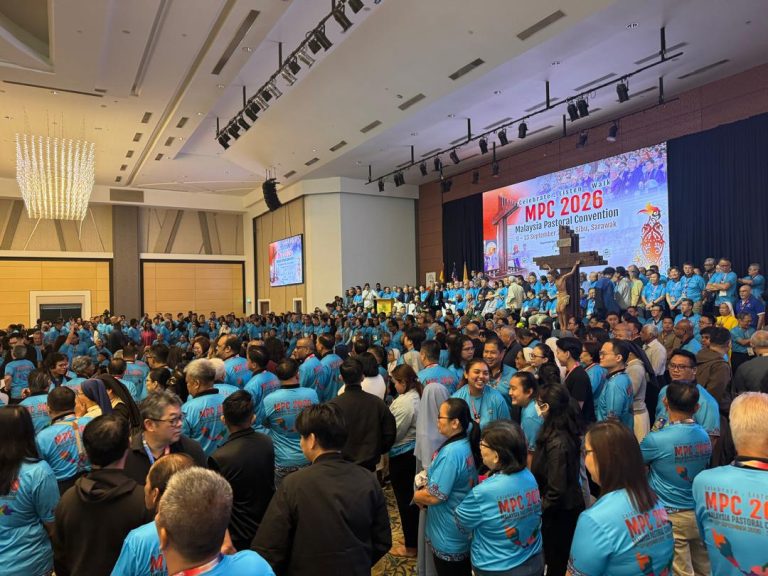
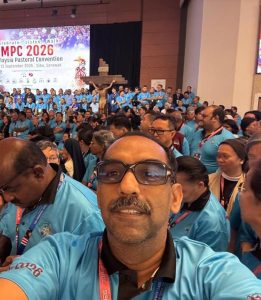
    The Malaysia Pastoral Convention 2026 (MPC 2026) held in Sibu brought together clergy, religious and lay leaders to reflect deeply on the Church’s mission in today’s Malaysian context. Among its many themes, catechetical formation stood out as a vital thread connecting faith, family, and social responsibility.

    Drawing inspiration from Laudato Si where Pope Francis in his encyclical reminded us that creation is not something of the past but is still unfolding and needing care, everyone is called to stewardship in Malaysia, a nation described as a treasure that must be cherished. Catechists are thus invited to nurture ecological awareness and moral responsibility, helping learners see creation as a living expression of God’s love.

    The sessions at MPC 2026 emphasized formation that builds unity in diversity, urging catechists to be bridges of dialogue and mutual respect. Families were recognized as the foundation of both Church and society, with catechesis playing a key role in supporting parents, children and youth. Strengthening faith and Gospel values through education was seen as essential to forming integrity, dignity and responsibility.

    MPC 2026 also called for a listening Church — one that accompanies the poor, marginalized and young people with humility and compassion. Catechists are challenged to listen seriously to youth, understand their realities and provide genuine pastoral accompaniment.

    Finally, transformation begins with personal conversion. Before institutional change can occur, catechists must learn to listen, welcome and live with humility. Through this renewal, catechetical ministry becomes missionary — forming hearts that reflect Christ’s compassion and minds that engage Malaysia’s social and ecological challenges.

    MPC 2026 thus reaffirms catechesis as a living dialogue between faith and life, calling every catechist to be an instrument of God’s love in a diverse and evolvin

    Author
    Picture of Mariaselvam Santiahoo

    Mariaselvam Santiahoo

    PDCC Core Team – Catechism

    PDCC is the official body that oversees the development of Catechesis in the Diocese of Penang, Malaysia.

    Contacts :

  • Finding Stillness on the Go: Catholic Prayer Apps for Modern Life

    Finding Stillness on the Go: Catholic Prayer Apps for Modern Life

    NEWSLETTER: SEPTEMBER 2026

    Finding Stillness on the Go: Catholic Prayer Apps for Modern Life

    by Dr Rosalind Simon – PDCC Core Team (Liturgy & Prayer Catechesis)

    Often, we are encouraged to spend time in daily prayer. This can be difficult for many of us –we often start and then falter. However, in a digital landscape filled with notifications and endless scrolling, a new generation of mobile applications is helping believers transform screen time into sacred time. For Catholics seeking to build a sustainable daily prayer habit, digital tools offer accessible entry points into traditional practices—from praying the Rosary to Lectio Divina.

    While many apps focus on vast libraries or gamified habit tracking, one long-standing option—now in its 20th year—stands out for its minimalist approach to daily contemplation: Pray as you Go.

    Produced by the Jesuits in Britain, Pray as you Go is designed around a simple premise: helping people pray during the periods of transit and transition in their daily lives—whether on waking, commuting, walking or resting. Unlike apps that require active reading or extensive browsing, Pray as you Go centres on a 10 to 13-minute daily audio framework rooted in Ignatian spirituality.

    It begins with the tolling of a church bell, which immediately puts you in the right frame of mind, and eases into opening music from around the world. This also helps us appreciate sacred music and calms us despite the rush of the morning. Scripture is read twice, punctuated by gentle questions that prompt personal reflection such as “What word in this passage caught your attention?” or “Where did you feel God’s presence today?” There is then a pause for personal reflection. Further simple questions invite listeners to reflect before ending the conversation with a closing prayer.

    If any of the accompanying songs resonate with you, they are readily available on Spotify, YouTube, Deezer and Tidal. The app is completely free, contains no advertisements and intentionally omits streak trackers or social pressure. The focus remains entirely on the personal encounter with God.

    Beyond the daily session, the app includes guided Examens – an Ignatian review of the day – specialized retreat series, prayers for mental health and exercises to help process complex emotions. By bringing the ancient practice of Ignatian reflection to headphones and smartphones, tools like Pray as you Go demonstrate that technology, when thoughtfully designed, can be an effective invitation to quietude and prayer.

    Author

    Dr Rosalind Simon

    PDCC Core Team (Liturgy & Prayer Catechesis)

    PDCC is the official body that oversees the development of Catechesis in the Diocese of Penang, Malaysia.

    Contacts :

  • Accompanying Young People Through Adolescence – The Catechist’s Role in Faith Formation

    Accompanying Young People Through Adolescence – The Catechist’s Role in Faith Formation

    NEWSLETTER: SEPTEMBER 2026

    Accompanying Young People Through Adolescence – The Catechist’s Role in Faith Formation

    by Dr June Joseph

    I recently attended the Parenting Teens workshop organized by the Penang Diocese Family Life Commission in collaboration with the Diocesan Mental Health Ministry. The programme brought parents and teenagers together in separate sessions to explore adolescent development, family relationships, mental health and the environment in which young people are growing up.

    As a public health professional, I found the discussion particularly relevant. Adolescent wellbeing and the current dilemmas surrounding teenagers in Malaysia (e.g. interpersonal and school violence, bullying, abuse, teenage pregnancy, rising child neglect, self-harm and substance abuse) are shaped by many factors: family relationships, friendships, school, digital media and the wider social environment. How adults understand these influences matters greatly to how we respond to young people.

    The developmental and mental health perspectives were useful, although I noticed that the sessions had limited explicit Catholic content. This led me to reflect on what could happen when these insights are brought more intentionally into the work of catechesis.

    Understanding the Adolescent

    Adolescence is a period of significant neurological, psychological and social development. The cognitive capacities involved in judgement, planning, impulse control, emotional regulation and decision-making continue to develop through adolescence and into early adulthood (until their mid-20s or early 30s). At the same time, adolescents may show greater sensitivity to emotional experience, rewards and peer influence. In situations that are emotionally charged and socially significant, these influences can weigh more heavily on decision-making than they do in adulthood.

    This does not mean that adolescents lack responsibility or are incapable of making rational decisions. Rather, it highlights the importance of providing guidance, appropriate boundaries and opportunities to practise decision-making. Responsibility develops progressively as young people gain experience and learn to evaluate choices, consequences and competing influences.

    This has practical implications for catechesis. Young people need space to think through situations, ask questions, consider consequences and learn to make sound choices in order to develop an informed conscience and the ability to exercise judgement.

    The Catechist as Formator

    Here, the role of the catechist goes beyond teaching a curriculum. While the roles of father and mother are indispensable, catechists too accompany young people as they develop their understanding of faith, themselves and their relationships with others.

    This requires some awareness of adolescent development. A teenager who is withdrawn, distracted or disengaged may be struggling with something outside the catechetical setting. It could involve friendship difficulties, bullying, family circumstances, trauma or emotional distress.

    While a catechist does not need to diagnose the problem, what matters is being attentive enough to notice when something may require a different response, a conversation with parents or a referral to someone with the appropriate expertise.

    Communication Matters

    While healthy faith-oriented boundaries between catechists and young people are necessary so that catechesis does not turn into counselling, adolescents also need to know that they can ask difficult questions and be heard in the setting. This becomes especially important when conversations involve sexuality, relationships, pornography, bullying, abuse or mental health.

    Here, a simple approach can be useful:

    Listen → Clarify → Validate → Guide.

    First, allow the young person to speak. Clarify what has actually happened rather than relying on assumptions. Acknowledge the person’s feelings without necessarily agreeing with the behaviour. Then provide guidance in the light of faith and sound judgement.

    Meeting Young People Where They Are

    Young people have already encountered ideas about sexuality, relationships, identity, body image, freedom and belonging through friends, family, social media and popular culture.

    It is therefore pivotal for catechesis to engage these realities. For example, when teaching about sexuality, young people need to understand why the Church speaks about the dignity of the person, love, responsibility, self-gift and the proper use of freedom –beyond the list of what is allowed and what is not. Conversational opportunities help young people think morally and critically. The same should apply to conversations about pornography, online relationships and peer pressure.

    Forming Conscience

    Parents, teachers and catechists cannot be present at every moment. The goal of formation is therefore to help adolescents develop the ability to recognize what is right and to choose it freely.

    Here, catechists can use real-life situations to encourage reflection in a manner that will help young people to learn to understand and apply a dignified, informed decision-making process. The sequence of reflection could involve: What is happening? Who might be affected? What choices are available? What are the consequences? Is this really a free choice, or is there pressure involved? What would respect for the dignity of the other person require?

    Theology of the Body

    Theology of the Body has an important place in this conversation.

    Adolescents are forming their understanding of their bodies, sexuality and relationships in a culture where people can easily be reduced to appearance, attractiveness or sexual value.

    The Catholic understanding begins with the dignity of the person. The body is part of the person and is not an object for use. Here, freedom is connected to truth and responsibility, and love needs to be genuinely self-giving.

    Mental Health and Safeguarding

    The involvement of the Diocesan Mental Health Ministry is particularly relevant.

    PDCC has already taken steps to safeguard our children, including through the ‘Safeguarding Minors’ workshop held online in March 2026. This provides a good foundation.

    The next task is to consider how this learning can continue to inform adolescent catechesis, especially as young people increasingly navigate digital spaces. Catechists may encounter concerns involving bullying, grooming, inappropriate online contact, exploitation, abuse or emotional distress. They are not expected to become mental health professionals, but they should be trained to respond appropriately, maintain boundaries, recognize when a concern requires action and follow the Diocese’s safeguarding and referral procedures.

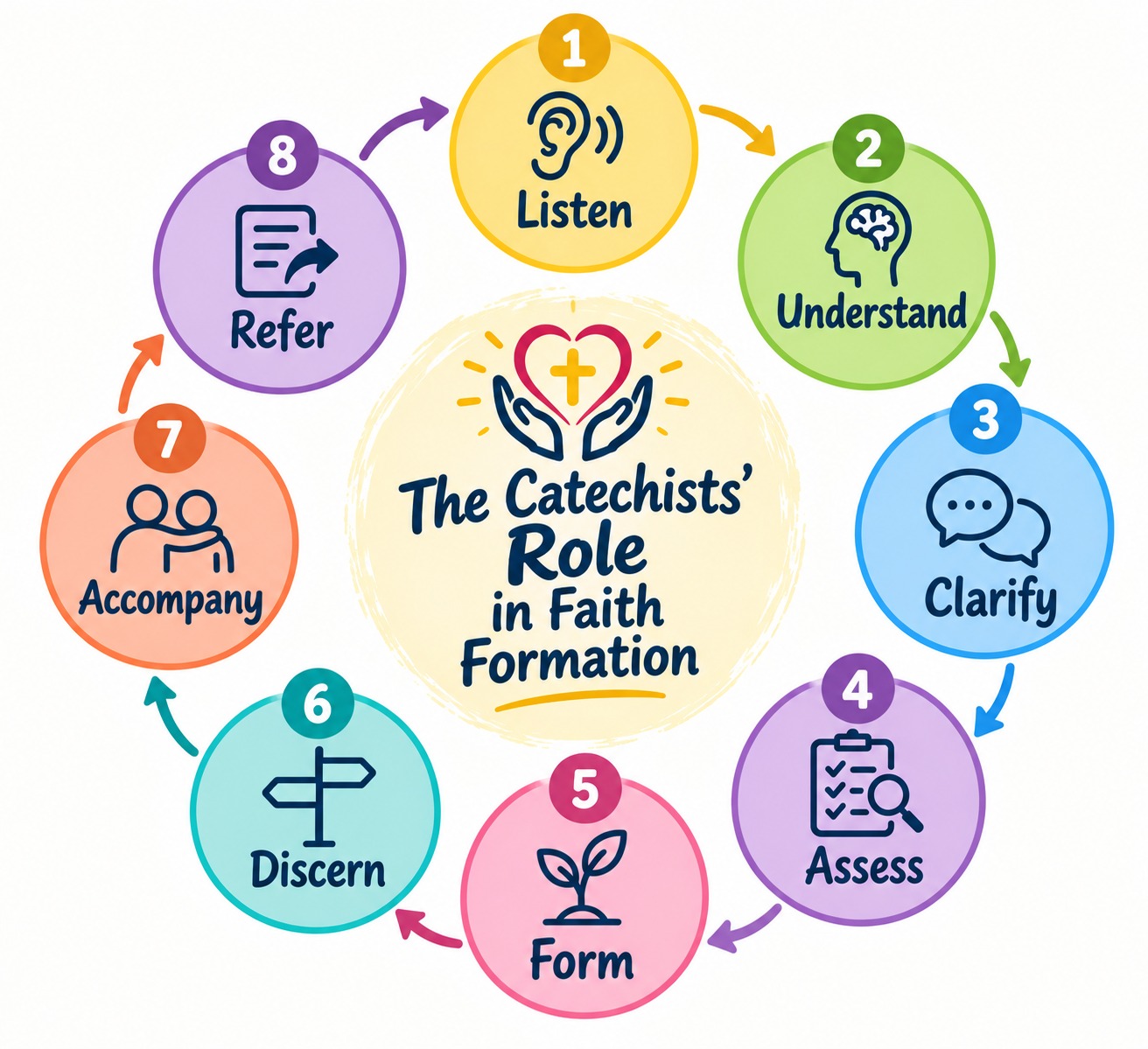
    A Practical Protocol for Catechists

    A simple framework could help catechists respond when a young person raises a concern:

    1. Listen– Give the young person space to speak.
    2. Understand– Consider the family, peer, school and digital context.
    3. Clarify– Establish what is known without making assumptions.
    4. Assess– Identify any safeguarding or serious wellbeing concerns.
    5. Form– Bring the issue into conversation with Scripture, Catholic teaching and the lives of the saints.
    6. Discern– Consider dignity, freedom, responsibility and consequences.
    7. Accompany– Continue appropriate pastoral support.
    8. Refer– Follow diocesan procedures when the matter requires safeguarding or professional intervention.

    A Wider Opportunity for Catechetical Formation

    The ‘Parenting Teens’ workshop made me reflect on the fundamental vocation of the catechist and how it complements that of parents in accompanying young people through adolescence. Parents remain the primary educators of their children, while catechists have a particular role in nurturing their faith, forming conscience and helping them connect Christian teaching with the realities of everyday life.

    These roles are distinct, but they are deeply complementary. The challenge for catechesis is to meet young people in the realities of their lives and then lead them towards Christ. This means understanding the developmental stage of the young people entrusted to catechists for faith formation, while remaining firmly grounded in the Church’s mission of evangelization and catechesis. The task is to accompany and form young people and gradually entrust them with greater responsibility as they develop towards adulthood.

    Author
    Picture of Dr June Joseph

    Dr June Joseph

    Dr June Joseph is a Catholic public health researcher, educator and anthropologist whose work bridges faith, public health and human dignity. Her international collaborations focus on maternal and child health, the first 1,000 days of life, women’s dignity, breastfeeding advocacy, health equity and the redemptive meaning of suffering through a Catholic lens. She is an Honorary Senior Fellow at the University of Queensland, Australia, and is committed to supporting faith-informed formation, research, policy and community initiatives. She can be contacted at [email protected]

    PDCC is the official body that oversees the development of Catechesis in the Diocese of Penang, Malaysia.

    Contacts :

  • THE L(AI)ZY MOVEMENT

    THE L(AI)ZY MOVEMENT

    NEWSLETTER: SEPTEMBER 2026

    THE L(AI)ZY MOVEMENT

    by Aron Azariah, PDCC Core team (Digital Missionaries)

     Artificial intelligence (AI) has quietly become part of everyday life. From how we search for information and communicate to how we work and create, AI is increasingly present in our daily routines.

    A 2025 Deloitte survey found that 76% of Gen Z and millennials reported using AI in their day-to-day lives. As the technology becomes more accessible, we are moving towards a generation that may have never experienced a world before generative AI became part of ordinary life. That raises an important question, especially for us as members of the Church: What is AI doing to us?

    Understanding AI and Gen AI

    Artificial intelligence is not new, but generative AI has changed how accessible it has become. Tools such as ChatGPT, Claude, Copilot, Meta AI, NotebookLM and CapCut can now generate text, images, music, video and other forms of content within seconds.

    The convenience is remarkable. AI can save time, assist with research, support creativity and make certain tasks easier. But the real concern begins when assistance becomes dependence.

    When convenience becomes dependence

    Think about the way we communicate in our parishes today. A poster can be designed within minutes. A caption can be generated almost instantly. A speech, image or video can be produced with very little human effort.

    There is nothing inherently wrong with using these tools. The question is whether we are still doing the thinking and creating ourselves, or whether we have gradually handed over the process.

    Before AI became so accessible, creating something for a parish required us to think, experiment, make mistakes and make decisions. It took longer, but the process required us to put something of ourselves into what we created.

    Perhaps we should therefore ask ourselves an uncomfortable question:

    “Can I still do these things without AI?”

    If we struggle to write a simple caption, develop an idea, prepare a speech or create a basic poster without assistance, perhaps our relationship with AI deserves closer examination. The issue is not that we use technology. The issue is whether convenience has begun to replace our ability, confidence or willingness to do things ourselves.

    What is happening to human creativity?

    This concern becomes even more significant when we consider the younger generation.

    For many of us, developing an idea once meant searching through books, asking another person, trying something ourselves or simply sitting with a problem until we worked it out. The next generation may grow up with AI as an ordinary part of school, work and creativity.

    That is not necessarily a bad thing. Every generation learns to use new tools. But there is a difference between using a tool and allowing a tool to replace the development of our own abilities.

    If we constantly ask AI to write for us, we practise writing less. If we turn to it whenever we need an idea, we give ourselves fewer opportunities to develop our own imagination. If we rely on it whenever we encounter a difficult problem, we may become less willing to sit with that problem and work through it ourselves.

    Human creativity needs room to grow. It develops through mistakes, limitations, conversations, experiences and even frustrations. When everything can be produced instantly, we need to be careful not to lose the value of the creative process itself.

     Who is guiding us?

    This brings us to an even deeper question for Christians. We have become very good at prompting AI. But are we equally attentive to the promptings of the Holy Spirit?

    When preparing something for our parish, our first concern should not simply be whether it looks professional or can be produced quickly. We should also ask whether what we are creating is faithful to our purpose as a Christian community.

    This is where prayer and discernment become important.

    Pope Francis, speaking at the 50th G7 Summit in 2024, described artificial intelligence as arising from the creative potential God has given human beings. He reminded us that science and technology are products of human creativity and therefore carry a responsibility to serve humanity.

    This perspective is important for Catholics. Technology does not exist outside our relationship with God. Human creativity itself is a gift from the Creator. The Book of Exodus reminds us that God gives human beings wisdom, understanding and knowledge for every kind of craft (Exodus 35:31).

    Our ability to design, write, imagine, build and create is part of what makes us human. We should therefore, be careful not to surrender that gift simply because a machine can now perform certain tasks more quickly.

     AI can assist us, but it cannot replace us

    Pope Leo XIV has taken this reflection further in his 2026 encyclical Magnifica Humanitas, which addresses the safeguarding of the human person in the age of Artificial Intelligence. He emphasizes the distinction between artificial intelligence and human intelligence. With human intelligence, conscience and freedom are responsible for guiding technological development.

    AI can process enormous amounts of information, recognize patterns and generate content at extraordinary speed. Yet it does not experience the world as we do. It does not grow through relationships or understand love, suffering, responsibility and compassion from within.

    Consider the life of a parish. An AI system may help us write a message for a bereavement ministry, but it has never sat beside a grieving family. It may suggest words for a youth programme, but it has never listened to the worries and hopes of a young person.

     The human context matters

    Generative AI can produce suggestions, but the human person provides the purpose, context and intention. An idea for a parish programme might come from noticing a particular need, a conversation with another parishioner or a moment of prayer and reflection. AI may help develop that idea, but it did not experience the community that gave birth to it.

    This is where discernment becomes essential.

    The important question is not simply: “What can AI create?” but: “What are we called to create?” These are two very different questions.

    So, should Catholics stop using AI?

    The answer is not to reject AI or pretend we can return to a world without it. AI will continue to develop, and the Church will encounter it in education, communication, administration, evangelization and many other areas.

    AI can help us brainstorm, organize information, check grammar, improve a first draft or save time on routine tasks. What we should avoid is allowing convenience to become a substitute for thought.

    Before asking AI to create something for the Church, perhaps we should first ask ourselves what we are trying to communicate and why it matters. We can pray about it, consider the people we are serving and discern whether our work will genuinely help them encounter Christ. Then, if AI can assist us, use it. But we remain the ones making the decision.

    Keep the human person at the center

    The Church does not need to become anti-technology. At the same time, it should not become an AI-dependent Church. Our task is to remain a discerning Church that knows how to use technology without allowing technology to define us.

    We are not called to abandon the tools of our time. We are called to use them responsibly while protecting what technology cannot provide: conscience, human relationship, compassion, faith, creativity and love.

    The greatest danger is not that AI will become capable of doing more and more things for us. The greater danger is that we may become so comfortable allowing it to do those things that we gradually forget what we, ourselves, are capable of doing.

    Our creativity is not merely a skill that can be outsourced when something more convenient comes along. It is part of the gift of being created in the image and likeness of God.

    So, the next time we sit down to prepare something for our parish, let us remember that the most important prompt in the life of a Christian is not the one we give to a machine. It is the invitation for us to receive a prompt from the Holy Spirit.

    AI can be our assistant. It should never become our master.

    Author
    Picture of Aron Azariah

    Aron Azariah

    PDCC Core team (Digital Missionaries)

    PDCC is the official body that oversees the development of Catechesis in the Diocese of Penang, Malaysia.

    Contacts :

  • Before We Teach, Can We Learn to Listen?

    Before We Teach, Can We Learn to Listen?

    NEWSLETTER: SEPTEMBER 2026

    Before We Teach, Can We Learn to Listen?

    By Marie Ann Dawson, Evangelizing Catechist

    Recently, I received an invitation to attend a formation entitled Landings: Exploring a New Pastoral Outreach to Welcome Returning Catholics. The invitation came a little over a week after I completed Module One of my formation as an Evangelizing Catechist. The timing made me pause and reflect.

    Even before receiving the invitation, I had been thinking about people who have left the Church, especially those who may still desire to return but carry fears within them. I found myself writing in my journal some of the following questions returning Catholics may ask: Will I really be welcomed? Will I be judged for having been away? Will people ask where I have been? Do I still belong?

    There was something deep within me that I felt I needed to reflect on. When the invitation came, it felt like a prompting to continue reflecting on what evangelization really asks of us. As catechists, we often focus on what we need to teach. We prepare lessons with passages from Scripture, prayers and activities. But evangelization invites us to look beyond the lesson and towards the person sitting in front of us.

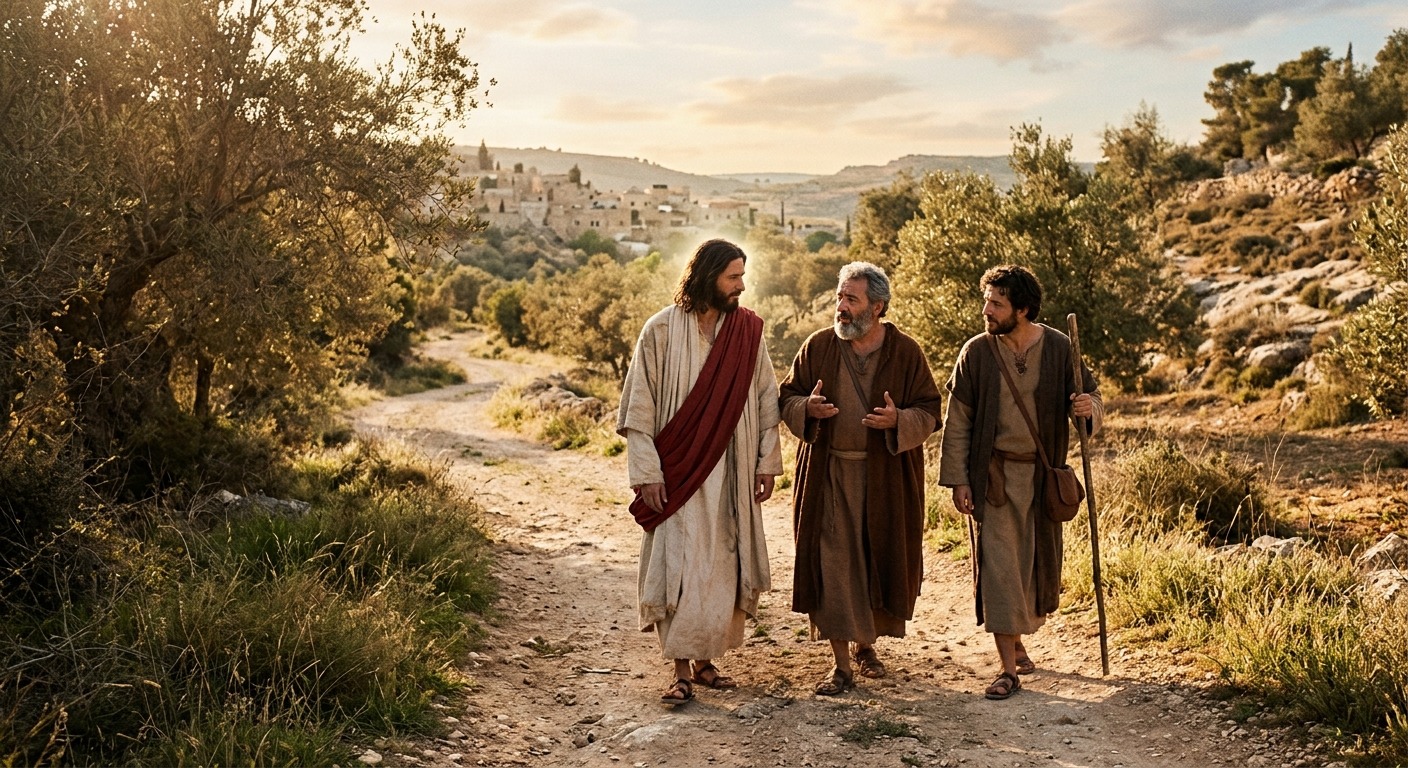
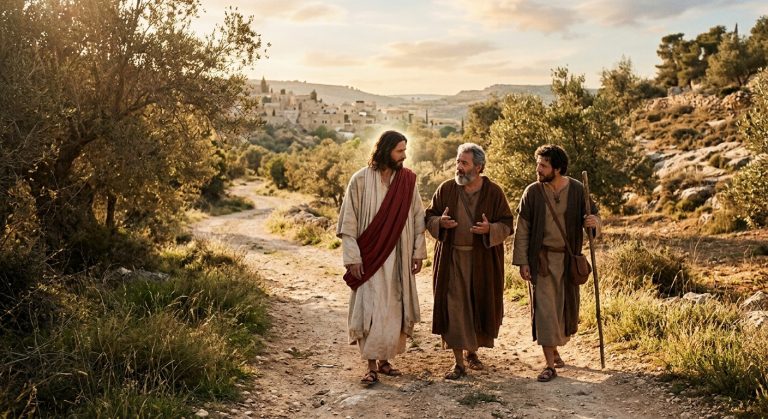
    Do we listen before we teach? The disciples on the road to Emmaus give us a beautiful example (Luke 24:13-27). Jesus walks alongside two disciples who are confused and disappointed. He asks them what they are discussing and allows them to speak. He listens to their story before He opens the Scriptures to them. Jesus first draws near. He listens. He accompanies. Then only He teaches. Perhaps this is also our calling as catechists.

    A child who struggles to participate may be communicating something we have not yet understood. A young person who asks difficult questions may not be rejecting the faith. A parent who seems distant may be carrying challenges we know nothing about. Sometimes, there is a story behind what we see.

    Listening does not mean that we stop teaching. It means that we take time to understand the person before us so that we can accompany them more effectively towards Christ. Evangelizing Catechesis is not simply about passing on information. It is about helping people encounter Jesus.

    So, before our next catechism session, perhaps we can pause and ask ourselves:

    • Do I know the person I am teaching?
    • Have I created a space where they feel safe to ask questions?
    • Do they experience Christ through the way I welcome them?

    These questions are not only for the children in our catechism classes. They are also for the families we accompany, the young people we serve and the people in our parish communities who may be searching, struggling or quietly wondering whether they still belong. Sometimes evangelization begins with Scripture. Sometimes it begins with Catechesis. And sometimes it begins with something as simple as saying: “Tell me. I want to understand you.”

    As catechists, may we learn not only to teach the faith, but also to listen, accompany and walk with those entrusted to us. For before we can help someone encounter Christ, perhaps we first need to help them know that they are seen, heard and welcomed. Before we teach, can we learn to listen?

    Author
    Picture of Marie Ann Dawson

    Marie Ann Dawson

    Evangelizing Catechist

    PDCC is the official body that oversees the development of Catechesis in the Diocese of Penang, Malaysia.

    Contacts :

  • On the Path to Sainthood – How the Catholic Church Recognizes a Saint

    On the Path to Sainthood – How the Catholic Church Recognizes a Saint

    NEWSLETTER: AUGUST 2026

    On the Path to Sainthood – How the Catholic Church Recognizes a Saint

    By Johnson Louisnaden, Saints & Relics team lead (PDCC Consultative Team)

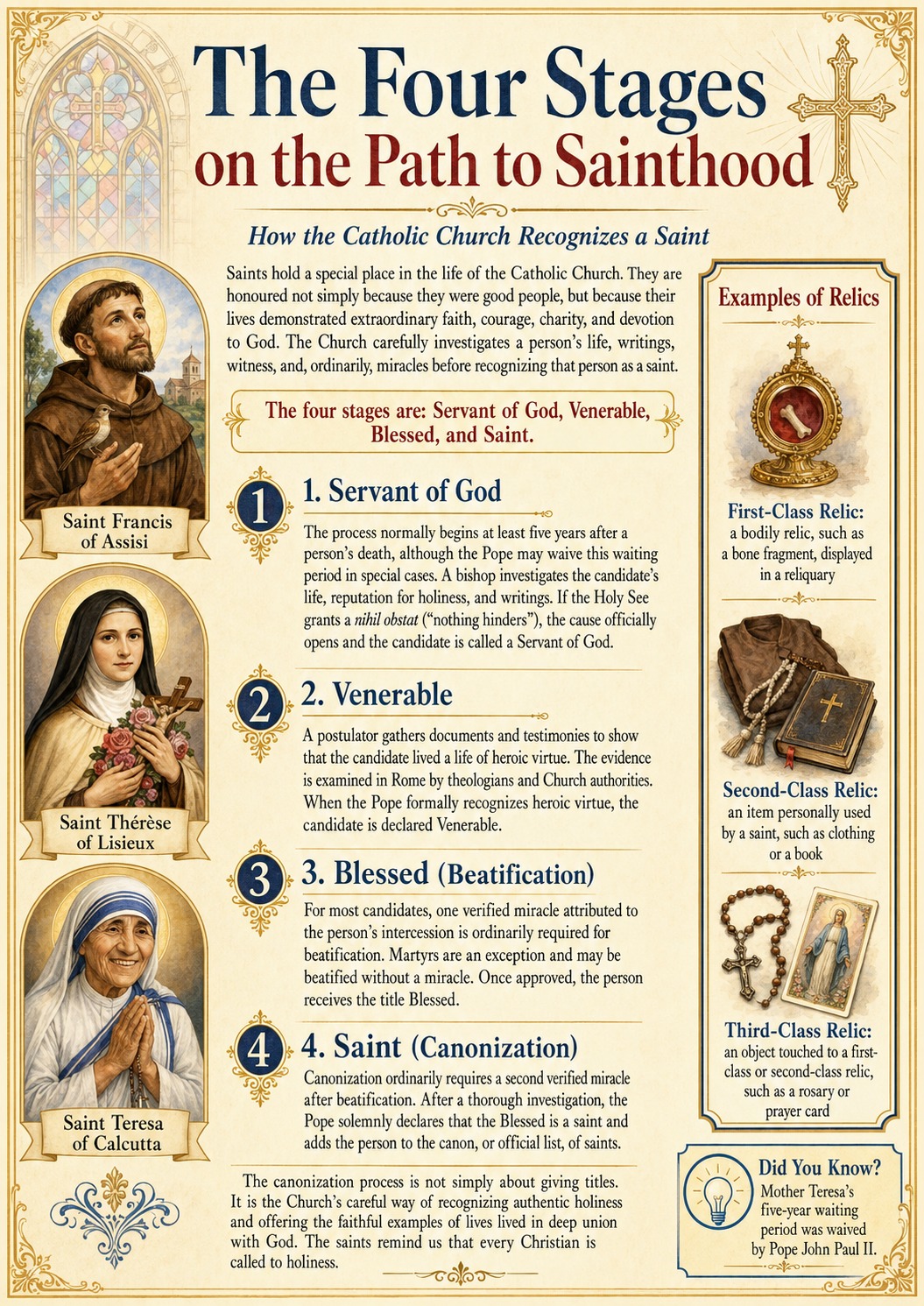
    Saints hold a special place in the life of the Catholic Church. They are honoured not simply because they were good people, but because their lives demonstrated extraordinary faith, courage, charity and devotion to God.

    The process by which the Catholic Church officially recognizes a person as a saint is known as canonization. It is a careful and often lengthy process involving historical research, examination of the person’s life and writings, testimonies from witnesses, theological review and, ordinarily, the verification of miracles attributed to the person’s intercession.

    The journey towards canonization is commonly explained through four stages of recognition:

    Servant of God, Venerable, Blessed and Saint.

    1. Servant of God

    The process normally begins at least five years after the person’s death. This waiting period allows time for emotions surrounding the person’s death to settle and helps ensure that the investigation can be conducted objectively.

    However, the Pope may waive the five-year waiting period in exceptional circumstances. One well-known example was the cause of Mother Teresa.

    A request to open the cause is usually made to the bishop of the diocese where the person died. The bishop begins an initial investigation into the candidate’s life, reputation for holiness, writings and actions.

    Before proceeding, approval is sought from the Holy See. When there is no objection to opening the cause, a nihil obstat may be granted. This Latin expression means “nothing stands in the way” or “nothing hinders.”

    Once the cause has officially begun, the candidate is given the title Servant of God. In the Diocese of Penang, Cardinal Sebastian Francis opened the cause of beatification and canonization for Sybil Kathigasu (1899-1948) on 1 July 2024.

    1. Venerable

    The next stage involves a more detailed examination of the candidate’s life.

    A Church official known as a postulator helps coordinate the cause. The postulator gathers documents, historical records and testimonies from people who knew the candidate or are familiar with the candidate’s life and work.

    This evidence is presented to the Dicastery for the Causes of Saints in Rome. Historians, theologians, bishops and cardinals examine whether the candidate practised Christian virtues to a heroic degree.

    These virtues may include faith, hope, charity, prudence, justice, courage and temperance.

    When the Pope formally recognizes that the candidate lived a life of heroic virtue, the person is declared Venerable.

    Being declared Venerable does not yet permit the person to be publicly honoured throughout the Church as a saint. However, it confirms that the Church considers the person’s life an exceptional example of Christian discipleship.

    1. Blessed — Beatification

    The third stage is known as beatification.

    For a Venerable who was not a martyr, beatification ordinarily requires the recognition of one miracle attributed to the candidate’s intercession. Catholics may ask the candidate to pray for them, just as they might ask a friend or family member to pray for them.

    A reported miracle must undergo a strict investigation. In the case of an alleged healing, medical experts examine whether the recovery was complete, lasting and medically inexplicable. Theologians then determine whether the healing can reasonably be connected to prayers made through the candidate’s intercession.

    Martyrs are treated differently because they gave their lives for the Christian faith. A miracle is ordinarily not required for a martyr’s beatification.

    Once beatification has been approved, the candidate receives the title, Blessed. Public devotion may then be permitted within particular places, dioceses, religious communities or groups associated with the person.

    1. Saint — Canonization

    The final stage is canonization.

    Ordinarily, another verified miracle is required after beatification. This miracle undergoes the same careful medical, theological and ecclesiastical examination as the first.

    For a martyr who did not require a miracle for beatification, a verified miracle is ordinarily required before canonization. In exceptional circumstances, the Pope may dispense with the usual requirements.

    After the necessary investigations have been completed, the Pope solemnly declares that the Blessed is a saint. The person’s name is then added to the Church’s official canon, or list, of saints.

    Canonization permits the saint to be publicly honoured throughout the universal Church. The saint’s life is presented as an example for Christians to imitate, and Catholics may confidently ask for the saint’s intercession.

    More Than a Title

    The canonization process is not simply a system for awarding religious titles. Its purpose is to determine, with great care, whether a person’s life offers an authentic and inspiring example of Christian holiness.

    The four titles—Servant of God, Venerable, Blessed and Saint—represent different stages of investigation and recognition. Behind every canonization are years, and sometimes centuries, of prayer, research, testimony and discernment.

    Ultimately, the lives of the saints remind the faithful that holiness is not reserved for a select few. Every Christian is called to grow in faith, love God and neighbour, serve those in need and remain faithful through the challenges of life.

    References / Further Reading

    The following sources provide further information on the Catholic Church’s process of beatification and canonization:

    1. Dicastery for the Causes of Saints — Sanctorum Mater: Instruction for Conducting Diocesan or Eparchial Inquiries in the Causes of Saints
      https://www.vatican.va/roman_curia/congregations/csaints/documents/rc_con_csaints_doc_20070517_sanctorum-mater_en.html
    2. Dicastery for the Causes of Saints — Regulation of the Postulators
      https://www.causesanti.va/it/documenti/regulation-of-the-postulators.html
    3. United States Conference of Catholic Bishops — Saints: The Canonization Process and Key Terms
      https://www.usccb.org/offices/public-affairs/saints
    4. Vatican News — WWII heroine could be Malaysia’s first saint: Sybil Kathigasu
      https://www.vaticannews.va/en/church/news/2024-07/malaysia-begins-canonization-process-wwii-sybil-kathigasu.html


    PDCC is the official body that oversees the development of Catechesis in the Diocese of Penang, Malaysia.

    Contacts :