By Jennifer Duarte
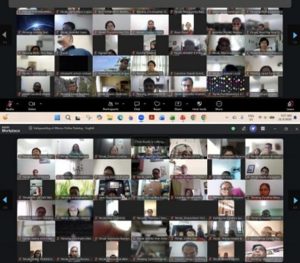
The Penang Diocesan Catechetical Commission (PDCC) organised an online training session on ‘Safeguarding of Minors’ for all Evangelising Catechists (ECs) in the diocese on 21 March 2026. More than 230 ECs from across the four language groups (English, Bahasa Malaysia, Mandarin and Tamil) attended the online course with about half of them being from the English language group.
His Eminence Cardinal Sebastian Francis, Bishop of the Penang Diocese (in a pre-recorded message), emphasized the responsibility and sacred duty of all ECs to safeguard minors (ages 18 and below) and vulnerable adults (who have the reasoning of a child); and protect them from all forms of abuse. “It is an essential dimension of evangelisation and witness of the church as the children are entrusted to the care and guidance of the church,” he said.
He instructed the ECs, “Keep the child at the centre of the narrative of the Kingdom of God as our Lord Jesus Christ did and you will never go wrong.” Indeed, each of us have a responsibility towards the children, as Jesus said, “Let the little children come to me, and do not hinder them for the kingdom of heaven belongs to such as these.” (Mt 19:14)
Deacon Clement Samuel, Head of the PDCC, further cited Pope Leo the XIV who said that “the Catholic Church has zero tolerance to any kind of abuse, not only sexual abuse.” Pope Leo had also said that we all need to develop a culture of care in our home and in our catechism classes.
The first speaker, Christopher Kushi, a practising lawyer and the Professional Standards Office (PSO) representative, spoke on ‘The Malaysian Legislation on Child Protection’. He pointed out that abuse is on the rise and the government has been proactive in introducing updated and legal measures to safeguard children. He cited five main categories of child abuse: physical, sexual, emotional, neglect and spiritual abuse. Mr Kushi stressed that ECs need to be vigilant, as they are the eyes and ears of the church. ECs are obligated to voice out, should observe anything amiss among the children that they come in contact with; and report it to the PSO, through the parish priest. ECs should not take it into their own hands (to protect themselves and the child) and let the PSO office take the necessary steps.
The second speaker, Dr Mary Bharathy, a psychiatrist, spoke on ‘Recognizing and Responding to Child Abuse’. She delved into the signs of a child with possible abuse and reiterated the call of the Cardinal – that it is everyone’s responsibility to recognise the signs of abuse and respond accordingly, through the right channels with careful, compassionate and timely attention. Silence or delay allows the abuse to continue and causes long-term psychological effects on the victims. She emphasised that the role of ECs was not to investigate, but to support, report and protect the child.
The third speaker, Dato Domnic Selvam Gnanapragasam, updated the ECs on the measures undertaken by the church to address matters related to safeguarding minors and vulnerable adults. The Church should always be a safe sanctuary, so the risk of abuse should be prevented or minimized in the local church. He explained that as volunteers in the church are not screened, the online training was necessary to create awareness for the protection of children and workers (like ECs) who work with children.
He laid-out guidelines that ECs should follow: –
- Ensure the safety of both the victim and purported abuser.
- Keep a lookout for signs of predators and abusers.
- Report abuse or suspected signs of abuse (to the parish priest or office).
- Support workers in case of false allegations of abuse.
- Don’t lose the human touch.
- Protect the reputation of the parish and the church.
- Avoid criminal action and legal suits.
In keeping the child in the centre of the narrative, ECs were reminded to mould the growing adults to be Christ-like. The training programme gave the ECs a better understanding of their safeguarding responsibilities and reporting obligations.
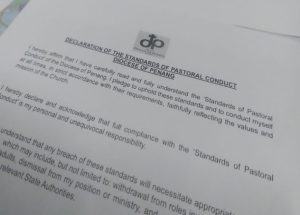
All participants of the online training are required to sign the Declaration of the Standards of Pastoral Conduct and courier the signed forms to the PSO office, Diocese of Penang before the end of April 2026. This certification will be kept by the diocesan PSO.