Category: Uncategorized

  • Cardinal Sebastian Francis in Kota Bharu for Holy Week

    Cardinal Sebastian Francis in Kota Bharu for Holy Week

    Your Shepherd, At Your Service

    By Sr. Mary Anne Fletcher, FMM

    The parish of Our Lady of Fatima of the Holy Rosary, Kota Bharu, Kelantan, was blessed with the presence of Cardinal Sebastian Francis from 26 March to 5 April. This isolated church with no resident priest currently; received a real pastoral grace by His Eminence’s 11 day stay with us – he was simply and joyfully one with the people! The parish deeply appreciated his leadership and guidance during the Holy Week liturgies and the exultant Easter celebrations. He was also often available in the confessional, offering the faithful the opportunity for reconciliation.

    Palm Sunday

    As Friday is the official state day off here, the parish celebrated Palm Sunday on 27 March with the traditional procession and readings.

    His Eminence, in his homily, highlighted the striking contrast between the world’s expectation of grandeur (i.e. riding a magnificent horse, a symbol of prestige and power); and our Messiah, who comes humbly seated on a donkey. The Cardinal’s reflections invited all to a deeper personal conversion. The reading of the Passion of Jesus set the tone for the days that followed.

    Holy Thursday

    Holy Thursday saw many parishioners involved in various ways in the solemn liturgy. Sr. Angela Wong, FMM, Parish Administrator, together with her team ensured that the celebration was smooth and prayerful.

    The washing of the feet, carried out by the Cardinal and Sr. Angela, drew the community into the self-giving love of Jesus.

    Sr. Angela washing the feet of a parishioner from Kem Desa Pahlawan (Army Camp)

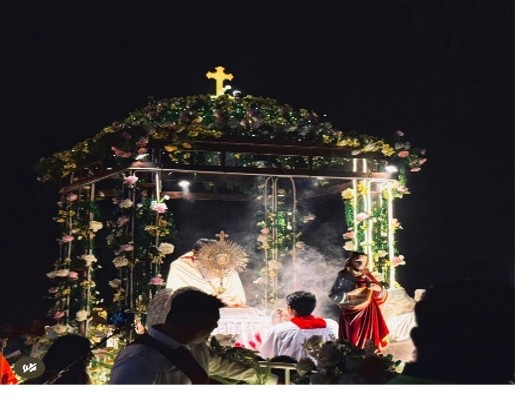
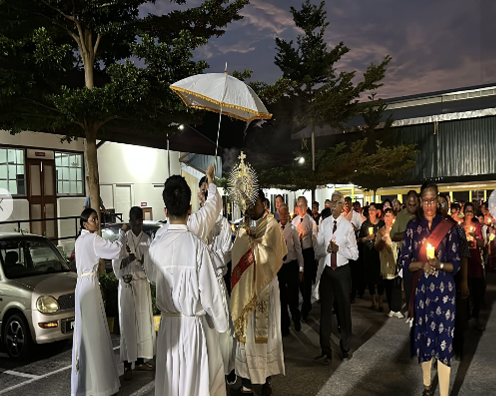
    The spirit of service continued into the Mass of the Lord’s Supper. At the end of the Mass, the Holy Eucharist was reverently transferred to a beautifully prepared Altar of Repose.

    The Altar of Repose

    Good Friday

    Under the sweltering heat of a 31-degree Celsius sun, at 4pm on Good Friday; parishioners walked the 14 Stations of the Cross around the Church grounds. Accompanied by the altar servers, Sr. Angela led the devotion, carrying a crucifix of more than three feet long on her shoulder.

    Sr. Angela carrying the Cross

    In solidarity with the suffering Christ, no one complained. One person reflected that “It was a spiritual experience, marked by prayers, reflections, and Scripture readings. Under the sun, what might have seemed as a discomfort was embraced instead as a grace.”

    The reading of the Passion was received as a profound grace, marked by sorrow and love. In the starkness of Christ’s death, the Blessed Sacrament was brought from the Altar of Repose to the bare altar for Holy Communion. The liturgy continued with the silent veneration of the Cross, a deeply moving moment for all present.

    Blessed Sacrament brought to the altar

    Easter Vigil

    Anticipation, joy and reverence filled the night of the Easter Vigil. A large Easter fire was lit in the church grounds for the Service of Light. Cardinal Sebastian Francis intoned the prayers and blessed the fire, while Sr. Angela carried the Paschal Candle.

    In darkness, the congregation processed into the church. A university student, Edvern Mobilik, solemnly intoned the Exsultet and the readings were proclaimed in rich multilingual expression.

    As the liturgy unfolded, the parish rejoiced in welcoming new members into the Church. Two baptisms were celebrated – an adult, who had completed the RCIA journey, and an infant. Twelve persons were confirmed: 6 from Kem Desa Pahlawan, 4 from the parish, and 2 from RCIA. Four received their First Holy Communion. On the preceding day, one couple had their Berkat Kahwin (convalidation of marriage). The Cardinal was kept fully occupied – and so was the parish.

    Easter Sunday

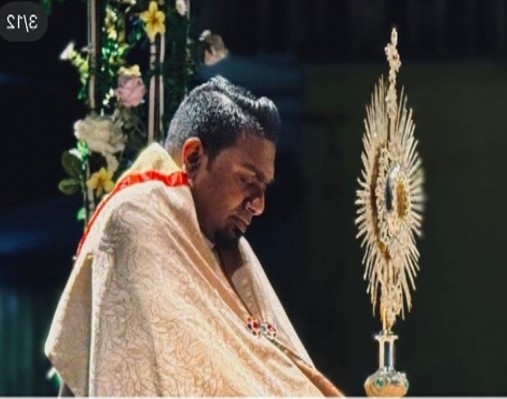
    The Mass of the Resurrection was celebrated with deep gratitude. The faithful rejoiced in the Risen Lord, and there was great reverence as the Body of Christ was elevated for adoration and acknowledgement of His sacrifice.  Great reverence was evident among the four who received Holy Communion for the first time. For many, it was also a memorable moment to receive the sacraments from a Cardinal. Cardinal Sebastian’s Easter message captured the heart of the celebration: “Peace be with you. A gift – the very heart of the Resurrection … a peace that restores, heals, and gives new life.”

    Cardinal at the Consecration of the Body of Christ
    First Holy Communion
    A group photo with Sr. Mary Anne (extreme left), Sr. Angela (extreme right), and the Cardinal in the centre


    PDCC is the official body that oversees the development of Catechesis in the Diocese of Penang, Malaysia.

    Contacts :

  • Online Training for ECs

    Online Training for ECs

    Online Training for ECs

    By Jennifer Duarte

    The Penang Diocesan Catechetical Commission (PDCC) organised an online training session on ‘Safeguarding of Minors’ for all Evangelising Catechists (ECs) in the diocese on 21 March 2026. More than 230 ECs from across the four language groups (English, Bahasa Malaysia, Mandarin and Tamil) attended the online course with about half of them being from the English language group.

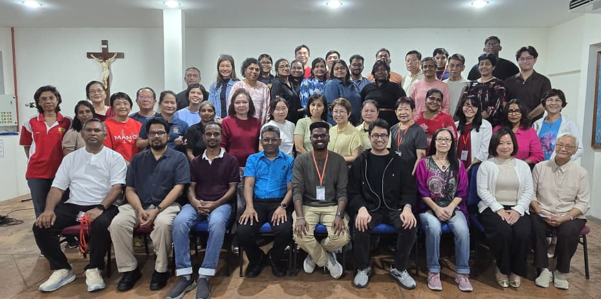
    Some of the participants in the online session

    His Eminence Cardinal Sebastian Francis, Bishop of the Penang Diocese (in a pre-recorded message), emphasized the responsibility and sacred duty of all ECs to safeguard minors (ages 18 and below) and vulnerable adults (who have the reasoning of a child); and protect them from all forms of abuse. “It is an essential dimension of evangelisation and witness of the church as the children are entrusted to the care and guidance of the church,” he said.

    He instructed the ECs, “Keep the child at the centre of the narrative of the Kingdom of God as our Lord Jesus Christ did and you will never go wrong.”   Indeed, each of us have a responsibility towards the children, as Jesus said, “Let the little children come to me, and do not hinder them for the kingdom of heaven belongs to such as these.” (Mt 19:14)

    Deacon Clement Samuel, Head of the PDCC, further cited Pope Leo the XIV who said that “the Catholic Church has zero tolerance to any kind of abuse, not only sexual abuse.” Pope Leo had also said that we all need to develop a culture of care in our home and in our catechism classes.

    The first speaker, Christopher Kushi, a practising lawyer and the Professional Standards Office (PSO) representative, spoke on ‘The Malaysian Legislation on Child Protection’. He pointed out that abuse is on the rise and the government has been proactive in introducing updated and legal measures to safeguard children. He cited five main categories of child abuse: physical, sexual, emotional, neglect and spiritual abuse. Mr Kushi stressed that ECs need to be vigilant, as they are the eyes and ears of the church. ECs are obligated to voice out, should observe anything amiss among the children that they come in contact with; and report it to the PSO, through the parish priest. ECs should not take it into their own hands (to protect themselves and the child) and let the PSO office take the necessary steps.

    The second speaker, Dr Mary Bharathy, a psychiatrist, spoke on ‘Recognizing and Responding to Child Abuse’. She delved into the signs of a child with possible abuse and reiterated the call of the Cardinal – that it is everyone’s responsibility to recognise the signs of abuse and respond accordingly, through the right channels with careful, compassionate and timely attention. Silence or delay allows the abuse to continue and causes long-term psychological effects on the victims. She emphasised that the role of ECs was not to investigate, but to support, report and protect the child.

    The third speaker, Dato Domnic Selvam Gnanapragasam, updated the ECs on the measures undertaken by the church to address matters related to safeguarding minors and vulnerable adults. The Church should always be a safe sanctuary, so the risk of abuse should be prevented or minimized in the local church. He explained that as volunteers in the church are not screened, the online training was necessary to create awareness for the protection of children and workers (like ECs) who work with children.


    He laid-out guidelines that ECs should follow: –

    • Ensure the safety of both the victim and purported abuser.
    • Keep a lookout for signs of predators and abusers.
    • Report abuse or suspected signs of abuse (to the parish priest or office).
    • Support workers in case of false allegations of abuse.
    • Don’t lose the human touch.
    • Protect the reputation of the parish and the church.
    • Avoid criminal action and legal suits.

    In keeping the child in the centre of the narrative, ECs were reminded to mould the growing adults to be Christ-like. The training programme gave the ECs a better understanding of their safeguarding responsibilities and reporting obligations.

    All participants of the online training are required to sign the Declaration of the Standards of Pastoral Conduct and courier the signed forms to the PSO office, Diocese of Penang before the end of April 2026. This certification will be kept by the diocesan PSO.


    PDCC is the official body that oversees the development of Catechesis in the Diocese of Penang, Malaysia.

    Contacts :

  • Lenten Activities for Reflection & Renewal

    Lenten Activities for Reflection & Renewal

    Lenten Activities for Reflection & Renewal

    CHURCH OF ST. ANTHONY, TELUK INTAN

    THE SEDER MEAL EXPERIENCE

    By Marie Ann Dawson, EC 

    The Catholic Church of St Anthony in Teluk Intan experienced a gentle, educational touch in Lent this April 2026 with a Seder-style meal designed especially for children. The parish transformed the hall into a warm, communal space where familiar rituals became hands-on lessons about faith, memory, and gratitude. Long tables held simple but symbolically rich elements—bitter herbs for hardship, matzah (flatbread) for haste and humility, a bowl of salt water for tears—each item introduced with a child-friendly explanation that connected the Passover tradition to the Lenten journey of reflection.

    Children moved from station to station, tasting a small piece of matzah, dipping it into salt water, and asking curious, earnest questions as evangelizing catechists and volunteers guided them. The atmosphere balanced reverence with lively participation: a youngster tracing the rim of a Kiddush cup, another whispering to a friend about the story of liberation. Parents noted how the tactile experiences made abstract themes—sacrifice, freedom, hope—accessible and memorable.

    This Seder Meal did not aim to replicate a full Jewish ritual but to honour its symbols in a Christian Lenten context, fostering inter-religious awareness and deepening the children’s grasp of their own season of preparation. The event left small faces thoughtful and the community quietly renewed.

    CHURCH OF THE SACRED HEART OF JESUS

    A PASSION PLAY BY THE CATECHISM CHILDREN & YOUTH

    By Mariaselvam, Catechism Coordinator

    During Lent this April 2026, the Sacred Heart of Jesus parish in Kulim drew the whole community into the heart of Holy Week by staging a moving Passion Play performed by catechism children and the youth. This Passion Play was an enactment of Christ’s final hours, beginning from the Last Supper through to the Crucifixion and ending with the Resurrection. It served both as a form of catechesis and that of a communal prayer. Simple costumes with earnest acting and carefully narrated scenes, made the Gospel accessible without diminishing its solemnity.

    For the children, the preparation for this performance was truly informative. Through rehearsals they learned scripture passages, reflected on Christ’s sacrifice, and practiced gestures of reverence and compassion. Youth leaders who mentored them guided the young performers to express grief, hope, and forgiveness in ways that that were equal in expression to older peers and even elders.

    Parishioners responded with quiet attentiveness. Many remarked on the authenticity and sincerity that the youth brought to familiar scenes. Older parishioners found the portrayals renewing, while families felt a deepened connection to the liturgical season. After the final scene, there was a shared moment of silence and prayer. This experience made Lent more tangible and left the parish renewed by the faithful witnesses of its young people.

    PDCC is the official body that oversees the development of Catechesis in the Diocese of Penang, Malaysia.

    Contacts :

  • A Beginning of Wonder: Discovering the Catechesis of the Good Shepherd

    A Beginning of Wonder: Discovering the Catechesis of the Good Shepherd

    A Beginning of Wonder: Discovering the Catechesis of the Good Shepherd

    By Kathlin Ambrose

    In a world that often moves too quickly, a gentle and meaningful encounter took place on Saturday, 7 March 2026, at the Church of the Immaculate Conception (CIC), Penang.

    Nineteen participants from seven parishes gathered for a half-day “Day of Discovery” (DoD) into the Catechesis of the Good Shepherd (CGS). What began as a workshop soon became an invitation into a different way of seeing the child, of experiencing faith, and of knowing God.

    Led by Monica Dicom and Rosalind Simon from the Church of Our Mother of Perpetual Help (OMPH), Ipoh, together with catechists from CIC and the Church of the Nativity of the Blessed Virgin Mary, the sessions offered a glimpse into the richness of CGS, alongside presentations such as the Altar, Epiclesis, Scooping, and the Good Shepherd. Participants were especially moved by the calm, reverent rhythm of the Atrium—a specially prepared space where children encounter God through hands-on materials, silence, and wonder. Many described it as “peaceful, intentional, and deeply respectful of the dignity of the child.”

    Developed in the 1950s by Dr Sofia Cavalletti and Gianna Gobbi using Montessori principles, CGS recognises the unique relationship between God and the young child, particularly before the age of six. Here, catechesis is not rushed instruction, but a quiet unfolding, where children come to know they are loved, known, and called by name.

    The morning was made even more memorable by the presence of Cardinal Sebastian Francis, who spent time encouraging participants and affirming the importance of this work.

    CGS Level 1 training for children aged 3–6 years is currently offered in the Penang Diocese at CIC and OMPH, with hopes for expansion as more catechists are formed. Those inspired can take the next step at the upcoming CGS Level 1 Part 1 Formation, to be held from 27 May to 1 June 2026 at CIC, led by the Kuala Lumpur Archdiocese team.

    For many, the DoD was just that—a beginning …

    PDCC is the official body that oversees the development of Catechesis in the Diocese of Penang, Malaysia.

    Contacts :

  • A Catechetical Formation on ANGELS & DEMONS in TAIPING

    A Catechetical Formation on ANGELS & DEMONS in TAIPING

    A Catechetical Formation on ANGELS & DEMONS in TAIPING

    Approximately 130 participants gathered at Taiping Catholic Church on 7 March for a catechetical formation titled Angels & Demons, organised by the Penang Diocese Catechetical Commission (PDCC) in collaboration with the Penang Diocese Healing & Deliverance Ministry (H&D).

    Approximately 130 participants gathered at Taiping Catholic Church on 7 March for a catechetical formation titled Angels & Demons, organised by the Penang Diocese Catechetical Commission (PDCC) in collaboration with the Penang Diocese Healing & Deliverance Ministry (H&D).

    The formation, attended mainly by Evangelising Catechists (ECs) from across the Diocese of Penang as well as members of the laity, aimed to deepen participants’ understanding of the Church’s teachings on the spiritual realm and to equip ECs with a clearer foundation for teaching and accompanying others in the faith.

    Deacon Clement Samuel, Head of Catechetics in the Penang Diocese gave a short introduction on why this topic matters. He shared that with the rise of secularization and people drifting away from God, many people are becoming more vulnerable to spiritual struggles and oppression.

    Deacon Charles Lazaroo, head of the Penang Diocese H&D Ministry, then spoke on the Church’s teaching about angels and demons. Drawing from the Nicene Creed, he explained that angels are spiritual beings created by God to serve Him and assist humanity in the journey toward salvation. The session also reflected on the role of guardian angels and the reality of demons, who were created good but chose to fall through their own free will.

    In the second session, Glenn Andrews from the H&D Ministry explored how the devil operates in the modern world. He explained that while possession is rare, individuals may experience other extraordinary forms of spiritual disturbance such as obsession or oppression when engaging in the occult or remaining in serious sin. More commonly, people experience the ordinary workings of the devil through daily temptations, distractions and doubts that slowly draw people away from God. Participants were encouraged to remain vigilant and rooted in prayer, particularly in today’s Digital Age where various influences can shape beliefs and behaviour.

    Arokiadass Anthonysamy, also from H&D, then spoke on Steps to Freedom in Christ, reminding participants that through Baptism, every Christian shares in Christ’s victory over sin and evil. He emphasised the importance of repentance, forgiveness, and inner healing, as well as the central role of the Sacrament of Reconciliation and the Eucharist in living a life of freedom in Christ.

    The formation concluded with a catechesis by Deacon Clement Samuel, Head of PDCC, on The Armour of God (Ephesians 6:10-20), encouraging participants to live lives rooted in virtue, prayer, and the Word of God. He emphasized that the Word of God is not merely a defence, but a way of life grounded in prayer, Scripture and disciplined virtue. Catechists are first called to live this reality through fidelity to the sacraments and awareness of their own spiritual weaknesses. While spiritual struggle is real, participants were reminded that Christ’s victory is greater, and they are called to guide others with confidence in grace rather than fear.

    Participants shared that the formation helped deepen their awareness of spiritual realities and the need to remain steadfast in faith. Riya, an RCIA candidate from Taiping Catholic Church, said, “I learned many new teachings about angels and how demons work. Now that I understand better, I believe I can overcome these struggles.”

    Andrea, an EC from the Church of the Divine Mercy in Penang, also reflected on her experience. “I now have a deeper understanding about the hierarchy of angels. At the same time, learning about demons has helped me reflect more deeply on my own spiritual life,” she said.

    Feedback from participants described the sessions as informative and insightful, with many noting that the sessions helped them better understand how spiritual struggles can take place in everyday life. Several participants also expressed the importance of sharing this knowledge with family members and younger generations so that they may grow in awareness and faith.

    The event concluded with a time of healing prayer and ministering, providing participants with an opportunity for spiritual renewal and encouragement in their walk with Christ.

    PDCC is the official body that oversees the development of Catechesis in the Diocese of Penang, Malaysia.

    Contacts :

  • Renewing catechesis in Asia

    Renewing catechesis in Asia

    Renewing catechesis in Asia

    From February 11-12, about 50 delegates, comprising bishops, priests, religious and laity from different parts of Asia, participated in the Meeting of Catechetical Leaders in the Episcopal Conferences of Asia.

    KUALA LUMPUR: From February 11-12, about 50 delegates, comprising bishops, priests, religious and laity from different parts of Asia, participated in the Meeting of Catechetical Leaders in the Episcopal Conferences of Asia. The Catholic Bishops’ Conference of the Philippines (CBCP) hosted the meeting at the Pope Pius XII Catholic Centre in Manila, Philippines.

    The meeting was initiated by the Vatican Dicastery for Evangelisation. The Dicastery, which is a department of the Roman Curia established by Pope Francis in 2022, was represented by Bishop Franz-Peter Terbartz- Van Elst and Msgr Eugenio Bruno, both officials of the dicastery. Archbishop Rino Fisichella, Pro-Prefect Dicastery for Evangelisation was unable to attend due to urgent work commitments.

    The delegation representing the Catholic Bishops’ Conference of Malaysia-Singapore- Brunei (CBCMSB) was headed by Most Rev Julian Leow Beng Kim, Archbishop of Kuala Lumpur. He serves as President of CBCMSB, as well as, bishop member of the Federation of Asian Bishops’ Conferences Office of Education and Faith Formation (FABCOEFF).

    The other delegates were Sr Dariah Ajap (Archdiocese of Kota Kinabalu), Stephanie Ng (Archdiocese of Kuching), Dr Steven Selavaraju (Archdiocese of Kuala Lumpur) and Fr Paul Shie (Apostolic Vicariate of Brunei). There was no representation from Singapore.

    The first day’s meeting began with prayer, after which Bishop Daniel O. Presto, Chairman of the Commission on Evangelisation and Catechesis of the CBCP, welcomed the delegates and set the tone for the day. He gently reminded them that the main aim of the meeting is not only to listen to the inputs and participate in discussions but also to learn from each other’s stories.

    This was followed by the delegates listening to a video-recorded message from Archbishop Rino Fisichella. The archbishop highlighted the importance of encounter and kerygma in catechesis. Catechesis should lead us to an encounter with Christ and neighbour and to proclaim the kerygma about Christ. This should foster in catechists the call to be evangelisers too.

    To assist catechists in discovering and deepening their mission as evangelisers, the Dicastery of Evangelisation has published two key documents in recent years, namely, the Directory for Catechesis (2020) and Motu Proprio Antiquum Ministerium (2022). Both documents have the same objective, that is, to promote the growth of catechesis in the life of the community under the primacy of evangelisation.

    The remainder of the day was dedicated to the presentation of reports by each of the fourteen episcopal conferences in attendance. Basically, the reports focused on certain key areas related to the Episcopal Conference: to what extent has the Directory for Catechesis been introduced? How has Antiquum Ministerium been implemented? What are the strengths and challenges faced in the task of catechesis?

    In their report, the delegates from CBCMSB, stated among others, that the Archdiocese of Kuching has implemented the directives of Antiquum Ministerium when twenty-two fulltime catechists from various parishes were formally installed to the Ministry of Catechist by Most Rev Simon Poh, Archbishop of Kuching, at the Church of St Ann, Kota Padawan on Aug, 2025.

    The proceedings of the first day concluded with the delegates being transported by bus to the De La Salle University where the celebration of the Holy Eucharist was held. It was presided over by His Eminence Cardinal Jose Furte Advincula, Archbishop of Manila. The delegates were warmly welcomed by the staff and students and treated to a sumptuous dinner, as well as entertained by students of the university with a series of cultural dances and songs.

    The proceedings of the second day were animated by the FABC-OEFF team. The day began with prayer, followed by a reflection on the topic FABC Documents on Catechesis by a FABC-OEFF representative. Following the reflection, a small group sharing focusing on the task of catechesis in relation to the pastoral priorities of the FABC was held in order to allow the delegates to reflect, contextualise and respond to the challenges and strengths of the churches in Asia. They also reflected and responded to the question as to how the OEFF could support the work of the episcopal conferences and dioceses in catechesis.

    The meeting concluded with the celebration of the Holy Eucharist presided over by Bishop Franz-Peter Terbartz-Van Elst at the Parish Church of St Maria Goretti. At the end of the celebration, Msgr Eugenio Bruno thanked the CBCP, those involved in the day-to-day arrangements of the meeting and the delegates for their engaging and active participation.

    Most of the delegates shared that they had a fruitful encounter during the two days. This was the first time that many of them had participated at a meeting of this nature. They look forward to similar encounters in the near future and also hope that the meeting will spark greater motivation and collaboration in catechesis among the episcopal conferences in Asia.

    Feedback from Malaysian delegates

    “I am deeply grateful for the opportunity to participate in the recent Catechetical Leaders’ Meeting in Manila. It was truly an enriching experience to meet catechetical leaders from different parts of Asia. The sharing, dialogue, and encounter with one another were inspiring and life-giving. Listening to the realities, challenges, and creative pastoral responses from other countries broadened my perspective and renewed my hope for catechesis in our region and local diocese. It was also motivating to see the deep commitment of so many who continue to serve the Church faithfully in the ministry of catechesis.

    “Two key Church documents guided much of the reflection during the meeting: the Directory for Catechesis and Antiquum Ministerium of Pope Francis. The Directory for Catechesis (2020) reminds me that catechesis today must be missionary, kerygmatic, and attentive to the real situations of people. It calls us to move beyond mere content transmission toward accompaniment, encounter, listening, dialogue and formation in Christian life. The document emphasises that catechesis should help people develop a living relationship with Christ, not simply knowledge about the faith. It also highlights the importance of digital realities, and the need for creative and contextsensitive approaches in our catechetical work.

    “Meanwhile, Antiquum Ministerium affirms the importance of the catechist by formally instituting the lay ministry of catechist in the universal Church. This recognition strengthens my understanding that catechists are not merely volunteers, but persons called, formed, and sent by the Church for a vital mission. The document encourages deeper formation, spiritual grounding, and ecclesial identity among catechists, reminding me that catechesis is not only a task but a vocation of service.

    “Reflecting on both documents together, I am reminded that the future of catechesis in Asia depends not only on programmes or materials, but on forming missionary disciples who can witness to the Gospel in their own cultures. The meeting in Manila helped me see that although our contexts differ, our hopes are the same: to help people encounter Christ and grow as members of the Church.

    “I returned from this meeting inspired, encouraged, and motivated to continue strengthening catechetical ministry in our local Church. I am thankful for this opportunity and for the prayers and support that made my participation possible. The presence, sharing, listening, encouragement, and shared commitment made the experience not only fruitful but deeply meaningful.” Stephanie Ng (Archdiocese of Kuching, Sarawak)

    “Attending the Meeting of Catechetical Leaders in the Episcopal Conference of Asia was a true “Emmaus moment” for me. Being with the catechetical leaders from across Asia to discuss the documents of Pope Francis — specifically Antiquum Ministerium — has fundamentally shifted my vision for our local mission.

    “The two days of listening, sharing, and presenting were deeply enriching. It was a profound consolation to realise that our struggles in Malaysia, and in my own archdiocese, especially the difficulty of imparting faith to the “digital generation”, are also shared by our brothers and sisters across Asia. We are not struggling in isolation; we are part of a universal Church facing the same “digital era” frontiers.

    “The input on Antiquum Ministerium (Institution of the Ministry of Catechist) moved me to see how many Asian countries have already embraced, translated, and implemented this document in their dioceses. My hope is that we, too, will give high priority to the formation of catechists, as recognised by the Church in the document.

    “The process of group sharing showed me that when we listen to each other’s strengths and challenges in catechesis and journey with other catechists, we grow stronger together. This is the Synodal Church in action — listening, discerning, and moving forward as one body. “I wish to express my deepest gratitude to Bishop Joseph Hii (Episcopal President for Catechetics) for this invaluable opportunity and for the enriching experience of participating in this meeting.” Sr Dariah Ajap, FSIC (Archdiocese of Kota Kinabalu, Sabah)

    PDCC is the official body that oversees the development of Catechesis in the Diocese of Penang, Malaysia.

    Contacts :

  • QUOTABLE QUOTES

    QUOTABLE QUOTES

    Quotable Quotes

    1. QUOTABLE QUOTES on the Goal of Catechesis –  from Directory for Catechesis (DC, 2020).


      The quotes highlight
      the central aim that the 5 tasks of making missionary disciples serve:

      • The definitive
        aim of catechesis is to put people not only in touch but in communion, in
        intimacy, with Jesus Christ: only He can lead us to the love of the Father
        in the Spirit and make us share in the life of the Holy Trinity. (DC #75)
      • Catechesis makes
        the initial conversion ripen and helps Christians to give a complete
        meaning to their existence, educating them in a mentality of faith in
        keeping with the Gospel, to the point of gradually coming to think, feel
        and act like Christ. (DC #77)
      • This pedagogy
        of Jesus then moulded the life of the Christian community: “they devoted
        themselves to the apostles’ teaching, to the breaking of bread and the
        prayers.” (Acts 2:42, DC #79)
       

      The 5 Fundamental Tasks of Making Missionary Disciples through
      Catechesis

      Here are
      quotable phrases that summarize the importance of each of the five tasks.

      1. Leading to knowledge of the faith [DC #80]

      Catechesis has the task of fostering the
      knowledge and exploration of the Christian message. (DC #80)

      In this way, it helps the believer to know the
      truths of the Christian faith, introduces him to the knowledge of Sacred
      Scripture and of the Church’s living tradition, fosters knowledge of the Creed
      (Symbol of the faith) and the creation of a coherent doctrinal vision that can
      be used as a reference in life. (DC #80)

      2. Initiating into the celebration of the Mystery [DC #81- 82]

      Through this task, catechesis helps the believer
      to understand the importance of the liturgy in the Church’s life, especially
      the sacrament of the Eucharist, source and summit of the life and mission of
      the Church. (DC #81)

      3. Forming for life in Christ [DC #83-85]

      The catechetical task of educating the believer
      to the good life of the Gospel involves the Christian formation of the moral
      conscience, so that in every circumstance he may listen to the Father’s will in
      order to discern, under the guidance of the Spirit and in harmony with the Law
      of Christ, the evil to be avoided and the good to be done and putting this into
      practice with diligent charity. (DC #84)


      4. Teaching prayer [DC #86-87]

      Catechesis has the task of educating the believer
      for prayer and in prayer, developing the contemplative dimension of Christian
      experience. (DC #86)

      When catechesis is permeated by a climate of
      prayer, the assimilation of the entire Christian life reaches its summit. (DC #86)

      This task implies the teaching of both personal
      prayer and liturgical and community prayer, initiating the believer into the
      permanent forms of prayer: blessing and adoration, petition, intercession,
      thanksgiving, and praise. (DC #87)

      5. Introduction to community life [DC #88-89]

      Catechesis, in reference to preparation for
      community life, therefore has the task of belonging to the Church; teaching the
      sense of ecclesial communion, promoting the acceptance of the Magisterium,
      communion with pastors, fraternal dialogue; forming believers in the sense of
      ecclesial co-responsibility, contributing as active participants to building up
      the community and as missionary disciples to its growth. (DC #89)


    PDCC is the official body that oversees the development of Catechesis in the Diocese of Penang, Malaysia.

    Contacts :

  • Bishop’s message

    Bishop’s message

    Bishops’s Message

    1. THE MAKING OF MISSIONARY DISCIPLES IN CATECHESIS – By His Eminence Cardinal Sebastian Francis, Bishop of Penang

      As the first catechist in the diocese, I, as the Bishop, hold the primary responsibility for promoting and guiding catechesis. I am called to foster a real passion for catechesis, allocate necessary resources, and ensure the adequate and ongoing formation of catechists across four dimensions:  

      • being (spiritual maturity),
      • knowing-how to be with (relational identity and missionary awareness),
      • knowledge (biblical-theological formation), and
      • savoir-faire (pedagogical skills).

      This comprehensive approach ensures that the diocese, inspired by the Holy Spirit, continually serves the new evangelization by transforming the faithful into joyful and competent missionary disciples.

      The Directory for Catechesis (2020) presents a compelling call for the renewal of the Church’s evangelizing mission, rooted in a pastoral conversion that affects all ecclesial activity. This renewal pivots on the formation of the missionary disciple—the central figure through whom the Gospel message is transmitted and lived.

      The Missionary Imperative and Kerygmatic Focus

      The Directory for Catechesis anchors catechesis within the broader, dynamic process of evangelization. This activity must adopt a posture of ‘missionary going forth’, viewing the missio ad gentes as the paradigm of all pastoral action. Catechesis is fundamentally redefined to incorporate the primacy of the kerygma, meaning the essential proclamation that ‘Jesus Christ loves you; he gave his life to save you; and now he is living at your side every day to enlighten, strengthen and free you’. Catechesis must therefore be consistently kerygmatic, leading to a deepening and existential encounter with Christ.

      The ultimate goal of this catechetical process is profound: transforming the baptized into authentic missionary disciples. The definitive aim of catechesis is to put people not just in touch, but in communion, in intimacy, with Jesus Christ. This shifts the understanding of the faithful from passive recipients of instruction to active participants in the catechetical initiative itself, sent out to proclaim the Word, thereby embodying ‘a permanent state of mission’.

      The Five Tasks of Missionary Discipleship Formation

      Catechesis pursues its central goal—communion with Christ—through five interconnected tasks, following the example of Jesus as he formed his disciples (teaching them mysteries, prayer, values, communion, and mission):

      1. Leading to knowledge of the faith: This task explores the truths of the Christian message, integrating understanding of Sacred Scripture and the Church’s living Tradition to create a coherent doctrinal vision. This knowledge ensures the missionary disciple’s commitment is rational and deeply rooted in the deposit of faith.
      2. Initiating into the celebration of the Mystery: Catechesis helps the faithful comprehend and experience liturgical celebrations and sacramental life. It focuses particularly on the Eucharist, which is the source and summit of the Church’s life and mission. This initiation shapes the believer’s identity by instilling attitudes like joy, communal sense, and appreciation for liturgical signs.
      3. Forming for life in Christ: This task calls Christians to holiness by demonstrating that a filial way of life follows the Beatitudes (the ‘Christian’s identity card’). It forms the moral conscience, educating believers to follow Christ’s example of love and discern specific vocations, thereby actively fostering the coming of the Kingdom of God.
      4. Teaching prayer: Prayer is first and foremost a gift from God. Catechesis develops the contemplative dimension, teaching the believer to pray with and like Jesus. A climate permeated by prayer enables the assimilation of the entire Christian life, providing the necessary spiritual foundation for missionary labour.
      5. Introduction to community life: This task develops the essential sense of belonging to the Church, promoting fraternal dialogue and communion with pastors. By forming believers in ecclesial co-responsibility, this dimension directly leads the faithful to become active participants—missionary disciples—in the growth and mission of the community.

      Conclusion: A Call to Pastoral Conversion and Missionary Action

      The Directory for Catechesis is a profound summons for all of us to embrace a deep pastoral conversion. This conversion is not merely a change in programs; it is a fundamental shift in posture—a commitment to missionary outreach as the very paradigm of all pastoral action.

      The goal before us is clear and transformative: to move the faithful from being passive recipients of instruction to becoming active participants in the Church’s life and mission. The five tasks of catechesis are the scaffolding for this work, ensuring that our people are not just taught about Christ, but are brought into communion, into intimacy, with Him.

      By fostering the four dimensions of catechist formation—being, knowing-how to be with, knowledge, and savoir-faire —and by prioritizing the primacy of the kerygma, we ensure that every person in our diocese is equipped to live in a “permanent state of mission”.

      Let us, therefore, with a real passion for catechesis and in the power of the Holy Spirit, dedicate ourselves to this evangelizing vision. It is through the formation of these joyful, competent, and authentic missionary disciples that the Gospel message will be transmitted, lived, and truly renewed in our time. The Kingdom of God is at hand; let us go forth and proclaim it.

    PDCC is the official body that oversees the development of Catechesis in the Diocese of Penang, Malaysia.

    Contacts :

  • Featured Parish Cathedral Of The Holy Spirit

    Featured Parish Cathedral Of The Holy Spirit

    Featured Parish Cathedral Of The Holy Spirit

    1. CATECHESIS SESSIONS @ The Cathedral of the Holy Spirit, Penang

      Catechism classes (Sunday School) are an integral part of a parish community. In every issue, we have featured one parish and the catechesis that takes place there. Here, we highlight a parish in the Penang Deanery.

      Name of Church:  Cathedral of the Holy Spirit

      Address: No. 1, Tingkat Besi Satu, Green Lane, 11600 Penang

      Telephone: 604-658 4909

      Website: https://chs-penang.seedlings.dev/

      Rector: Fr. Raymond Raj


      Catechism Coordinator (English): Anne Ho

      Assistant Primary Coordinator (English): Maria Yeap

      Assistant Secondary Coordinator (English): Christopher Siddharth

      CLOW Coordinator (English): Kenneth Ho

      Number of CLOW ECs (English): 6 groups (with 4 members in each group)


      Time of Catechism: Saturday, 4 pm (English)

      Profile of Catechism Classes in 2025

      Classes

      Pre-School to Year 6

      Form 1-5

      Enrolment

                   90

      100

      Number of ECs & Helpers

                   19

      16


      Anne Ho, the Catechism Coordinator at CHS, Penang, shares her experience.


      1. What we found works for us:
      • Camps (with outreach activities).
      • Praise & Worship and Devotion time before class begins.
      • Engaging with parents, whenever possible.
       
      1. What we are thinking of introducing this year:
      • More outreach activities.
      • Sports day or something similar.
      • Bible quiz.
       
      1. Challenges we face
      • Students prioritising exams and tuition over faith formation.
      • Negative influence via social media.

      We would like to share one of our past events.

      Last Christmas (2025), the Ministries under the Formation Cluster in the Cathedral of the Holy Spirit came together to organize an outdoor Christmas Crib for the parish.

      The Formation Cluster comprises the Catechism, CLOW, RCIA and Parish Formation Ministries. Not only was a different sort of Nativity scene presented, but the Formation Ministries put together videos and reflections to help parishioners prepare themselves for Christmas.

      Info-boards provided a brief understanding of the various Advent scenes. They also allowed parishioners to view heart-warming videos of what Christmas means to us, especially to our children.

                                                                                                                         The unique Nativity scene

                                                                                                         The Info Boards with QR codes for more info.

                                                                                                    May the Holy Spirit continue to inspire all ECs to

                                                                                                            not only be teachers of God’s truth,

                                                                                                            but also be witnesses of His love.

    PDCC is the official body that oversees the development of Catechesis in the Diocese of Penang, Malaysia.

    Contacts :

  • Deanery Report

    Deanery Report

    Deanery Report : Perak Deanery

    1. TAIPING CATHOLIC CHURCH – Shared by Anne Choong, Catechism Co-ordinator at Taiping Catholic Church


    Celebrating a Sacerdotal Anniversary

    The parish of Taiping celebrated Rev. Msgr.  Stephen Liew’s 44th Sacerdotal Anniversary at the Flemington Hotel on 3 September. They also had a potluck at the IJ terrace after Sunday Mass on 7 September 2025. 

    Each Sunday School class gave him a special ordination anniversary card to express their gratitude for his service in the mission of the Church.

    Building friendships with a Tele-match

    15 November 2025 was an exciting day for the Sunday School children from Year 1 to Form 4 because they had a tele-match. There were 6 teams that took part in various games. Ultimately, it was Red House that emerged the overall winner. Students were given awards for Best Performance in Class and Best Attendance for 2025. The event ended with a potluck fellowship.

      2. CHURCH OF ST FRANCIS DE SALES, SITIAWAN – Shared by Punithamarya Anthoney, Catechism Co-ordinator at SFDS, Sitiawan.

    Showcasing Talents

    A Catechetical Concert was held at the Church Hall of St Francis de Sales, Sitiawan, on 29 November 2025 to recognise and appreciate the talents of the catechism students. The Parish Priest, Rev. Fr. Stanley Antoni, parents, ECs, and many parishioners attended this concert.

    The event began with a welcome speech by the coordinator followed by an opening prayer by the parish priest. Performances included a welcome dance and presentations by students from Year 1 to Form 5, such as sketches, skits, and group singing based on the theme ‘We Can Make the World a Better Place’ (Philippians 2:4).            

    The concert was outstanding and well received. Volunteers from the church community assisted with stage preparation, hall setup, and refreshments, contributing significantly to the smooth running of the programme. Students showcased their talents confidently, achieving the event’s objective.

    The Catechetical Concert 2025 was a memorable and meaningful event. The ministry looks forward to organising more enriching programmes in the future.

    PDCC is the official body that oversees the development of Catechesis in the Diocese of Penang, Malaysia.

    Contacts :